


 Home
Home
Hi, I'd like to ask—does sodium carbonate melt? What is the melting point of sodium carbonate? How does heating sodium carbonate affect its chemical properties? Are there any precautions when melting sodium carbonate? Thanks!
Does Sodium Carbonate Melt?
Related Encyclopedia
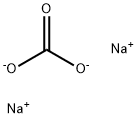
- 497-19-8
- CH2O3.2Na
- 105.99
- All (113)
- China (64)
- (113)
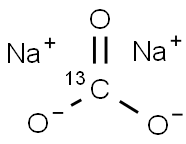
- 93673-48-4
- CNa2O3
- 107
- All (0)
- China (0)
- (0)
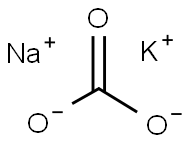
- 10424-09-6
- CKNaO3
- 122.1
- All (0)
- China (0)
- (0)
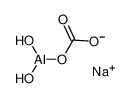
- 16482-55-6
- CH2AlNaO5
- 143.99500
- All (0)
- China (0)
- (0)
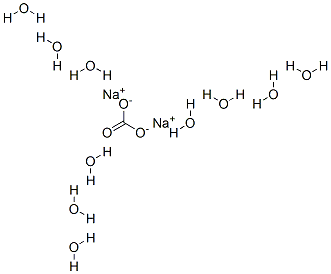
- 6132-02-1
- CH20Na2O13
- 286.14
- All (3)
- China (1)
- (3)
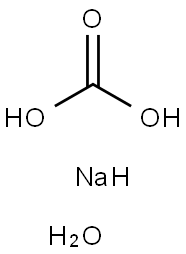
- 5968-11-6
- CH5NaO4
- 104.04
- All (7)
- China (4)
- (7)
- 24551-51-7
- CH20Na2O13
- 286.14
- All (3)
- China (1)
- (3)
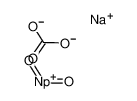
- 57127-86-3
- CNaNpO5
- 351.99700
- All (0)
- China (0)
- (0)
- 85135-19-9
- CH2NaNpO6
- 370.01300
- All (0)
- China (0)
- (0)
- 85135-20-2
- CH2NaO6Pu
- 377.01300
- All (0)
- China (0)
- (0)
Related Products More >

- 497-19-8
- USD 240.0000
- 25kg
- 497-19-8
- USD 200.0000
- 25kg
- 497-19-8
- USD 238.0000
- 40kg
- 96036-03-2
- Request For Quotation
- 9002-86-2
- Request For Quotation
- 86508-42-1
- Request For Quotation
- Bulk
- 86508-42-1
- Request For Quotation
- 200KG/Drum
- 86508-42-1
- Request For Quotation
- bottle or customized


As an ionic compound, sodium carbonate (Na₂CO₃) is composed of sodium cations (Na⁺) and carbonate anions (CO₃²⁻) held together by strong ionic bonds. These ionic bonds give the compound its characteristic physical and chemical properties. The melting point of sodium carbonate is approximately 851°C. This relatively high melting point is a result of the strong electrostatic forces between the positively and negatively charged ions in its crystal lattice. To put this into perspective, compared to common substances, water boils at 100°C, and many organic compounds have much lower melting points. Even some metals, like lead with a melting point of about 327°C, melt at significantly lower temperatures than sodium carbonate. This high melting point indicates that a substantial amount of energy is required to break the ionic bonds and transform the solid sodium carbonate into a liquid state.
When sodium carbonate is heated, its chemical properties can be affected in different ways depending on the temperature and reaction conditions. At the melting point of 851°C, the transition from solid to liquid is primarily a physical change. The structure of the sodium and carbonate ions changes from an ordered crystal lattice to a more disordered, flowing state, but the chemical composition of the compound remains essentially the same at this stage. However, if the temperature is increased further, beyond the melting point, sodium carbonate can undergo chemical reactions. Under extremely high temperatures, it can decompose into sodium oxide (Na₂O) and carbon dioxide (CO₂). The chemical reaction can be represented as: Na₂CO₃ → Na₂O + CO₂↑. But this decomposition reaction requires a much higher temperature and is not a common occurrence during the simple melting process. Additionally, in the presence of moisture and certain reactive substances in the air, sodium carbonate may also undergo side reactions. For example, it can absorb water vapor from the air to form hydrates under normal conditions, although in a high-temperature melting environment where moisture is usually removed, this is less of a concern compared to the potential decomposition reaction.
When melting sodium carbonate, several precautions need to be taken. First and foremost is the selection of appropriate containers. Due to the corrosive nature of molten sodium carbonate, not all materials can be used as containers. It has the potential to react with many common materials, especially at high temperatures. Ceramic crucibles are often a suitable choice because they can withstand high temperatures and have good chemical resistance against sodium carbonate. Some specialized metal crucibles, such as those made of nickel, can also be used, as they are less likely to react with the molten compound. On the other hand, glass containers are not suitable, as glass can be attacked and dissolved by molten sodium carbonate, and common metals like iron or aluminum may corrode rapidly under these conditions, leading to contamination of the molten sodium carbonate and potential damage to the container.
Safety in the operating environment is another crucial aspect. The high temperatures involved in melting sodium carbonate pose significant risks. Adequate ventilation is essential to dissipate the heat generated during the process and to remove any potential fumes or gases that may be released. Operators should be equipped with proper personal protective equipment, including high-temperature resistant gloves, goggles, and long-sleeved clothing. This protects them from burns caused by direct contact with the hot container or splashes of the molten substance. Moreover, precise temperature control is necessary. Using accurate temperature measurement devices, such as thermocouples, is important to ensure that the temperature is maintained at the desired level. If the temperature exceeds the required melting point by too much, there is a risk of unwanted chemical reactions, such as decomposition, which can affect the quality of the product or the outcome of an experiment.
In industrial applications, the melting properties of sodium carbonate play a vital role. For instance, in the glass manufacturing industry, sodium carbonate is one of the key raw materials. It is mixed with other substances like silica and limestone and then melted at high temperatures. The melting of sodium carbonate helps to lower the melting point of the overall mixture, facilitating the formation of a homogeneous glass melt. In this process, understanding the melting behavior and chemical stability of sodium carbonate is essential for controlling the quality and properties of the final glass product. Any deviation in the melting process, such as incorrect temperature control or use of inappropriate containers, can lead to defects in the glass, such as bubbles or uneven composition.
Furthermore, the purity of sodium carbonate can also influence its melting behavior. Impurities present in sodium carbonate, such as sodium chloride, sodium sulfate, or other trace elements, can act as contaminants and affect the melting point. They may form eutectic mixtures with sodium carbonate, reducing the overall melting point of the substance. This means that impure sodium carbonate may start to melt at a temperature lower than the standard 851°C. In applications where precise melting point control is required, such as in certain chemical synthesis processes or high-quality glass production, using high-purity sodium carbonate is of utmost importance to ensure consistent and reliable results.
Overall, sodium carbonate's ability to melt, its specific melting point, and the changes in its chemical properties upon heating are all interconnected aspects that need to be carefully considered. By taking the necessary precautions during the melting process, industries can harness the unique properties of sodium carbonate effectively, whether it is for manufacturing glass, producing chemicals, or other applications. Understanding these details also contributes to advancements in scientific research and the development of new processes that rely on this versatile compound.
The melting point of sodium carbonate is approximately 851°C (1,564°F). This relatively high melting point is a result of the strong ionic bonds that hold the compound together. Sodium carbonate is composed of positively charged sodium ions (Na⁺) and negatively charged carbonate ions (CO₃²⁻). These ions are arranged in a highly ordered lattice structure in the solid state. To break this lattice and transition the compound into a liquid, a significant amount of energy is required to overcome the electrostatic forces of attraction between the oppositely charged ions. When heated to 851°C, the thermal energy supplied is sufficient to disrupt the regular arrangement of ions, allowing them to move more freely and resulting in the formation of a molten liquid.
Heating sodium carbonate can have a profound impact on its chemical properties. At temperatures below its melting point, in most common laboratory or industrial scenarios where heating is moderate, sodium carbonate remains relatively stable. However, as the temperature rises well above its melting point, approaching or exceeding 1000°C, thermal decomposition begins to occur. The chemical reaction for this decomposition is Na₂CO₃ → Na₂O + CO₂↑. In this reaction, the sodium carbonate breaks down into sodium oxide (Na₂O) and carbon dioxide gas (CO₂). Sodium oxide is a basic oxide. When it comes into contact with water, it reacts vigorously to form sodium hydroxide (NaOH), a strong base. This decomposition reaction is exploited in several industrial processes. For example, in the glass - making industry, the decomposition of sodium carbonate helps in lowering the melting point of the silica (the main component of glass) and also contributes to the formation of the glass network structure by reacting with other components in the glass batch.
When it comes to melting sodium carbonate, there are numerous precautions that must be adhered to. Due to its high melting point, the equipment used for melting needs to be carefully selected. Crucibles made of materials with high melting points and chemical resistance are essential. Platinum crucibles are ideal as they can withstand high temperatures and do not react with sodium carbonate. High - purity alumina crucibles are also commonly used, as they offer good thermal stability and chemical inertness towards sodium carbonate. Stainless steel crucibles can be used in some cases, but there is a risk of corrosion over time, especially if the molten sodium carbonate is in contact with the metal for extended periods.
Sodium carbonate is a corrosive substance. In both its solid and molten forms, it can cause harm if it comes into contact with the skin or eyes. Therefore, appropriate personal protective equipment (PPE) is a must. Heat - resistant gloves are necessary to protect the hands from the high - temperature molten material. A lab coat should be worn to safeguard clothing from potential spills or splashes. Safety goggles are crucial to prevent any accidental splashing of the molten sodium carbonate into the eyes. Inhalation of sodium carbonate dust or fumes, especially during heating, can also pose a risk to respiratory health. Working in a well - ventilated area or using a fume hood is essential, particularly when handling large quantities of sodium carbonate or when heating it at high temperatures that may generate more airborne particles or gases.
Moisture is another factor to consider. Sodium carbonate is hygroscopic, meaning it readily absorbs moisture from the air. If a sample of sodium carbonate containing moisture is heated, the sudden vaporization of water as the temperature rises can cause spattering of the molten material. This not only creates a mess but also poses a significant safety hazard. To avoid this, it is advisable to dry the sodium carbonate thoroughly before attempting to melt it. In industrial settings, where large - scale melting of sodium carbonate takes place, proper process control is vital. Monitoring the temperature carefully during the heating process is essential to prevent overheating, which could lead to excessive decomposition or even damage to the equipment. Slow and controlled heating is recommended, whether in a laboratory using a temperature - controlled hot plate or in an industrial furnace, to ensure a smooth melting process and to avoid any unwanted chemical reactions or safety incidents.
To answer the question of whether sodium carbonate melts, the answer is a definite yes. Sodium carbonate is an ionic compound, and like other ionic substances, it exists in a crystalline lattice structure at room temperature. The ions within this lattice are held together by strong electrostatic forces of attraction. When heat is applied, the thermal energy begins to disrupt these forces. The melting point of sodium carbonate is approximately 851°C (1,564°F). At this specific temperature, the energy input is sufficient to break down the ordered arrangement of the ions in the solid lattice, allowing the compound to transition into a liquid state. This temperature is relatively high compared to many organic compounds because the ionic bonds in sodium carbonate are quite strong, and a significant amount of energy is required to overcome them.
The reason sodium carbonate melts at this particular temperature can be further explored through the concept of lattice energy. Lattice energy is the energy required to separate one mole of a solid ionic compound into its gaseous ions. In the case of sodium carbonate, the lattice consists of sodium cations (Na⁺) and carbonate anions (CO₃²⁻). The relatively small size of the sodium cations and the polyatomic nature of the carbonate anions result in a complex yet stable lattice structure. The strong electrostatic interactions between the oppositely charged ions contribute to a high lattice energy. As heat is added, the kinetic energy of the ions increases. Once the kinetic energy reaches a level that can counteract the lattice energy, melting occurs. Additionally, the crystal structure of sodium carbonate, with its specific arrangement of ions in three - dimensional space, also plays a role in determining the exact temperature at which melting takes place.
Heating sodium carbonate has several effects on its chemical properties. When sodium carbonate is heated, initially, it simply undergoes a physical change from solid to liquid at its melting point. However, if the temperature is increased further, chemical reactions can occur. In an open - air environment, prolonged heating above its melting point can lead to thermal decomposition. At temperatures well above 851°C, around 1000°C or higher, sodium carbonate can decompose into sodium oxide (Na₂O) and carbon dioxide (CO₂). The chemical equation for this reaction is Na₂CO₃→Na₂O + CO₂↑. This decomposition is a result of the increased thermal energy causing the carbonate anion to break apart. The released carbon dioxide escapes into the atmosphere, and the sodium oxide remains. Moreover, in the molten state, sodium carbonate becomes more reactive. It can act as a strong base and react with acidic substances. For example, in the glass - making process, molten sodium carbonate reacts with silica (SiO₂), which is acidic in nature. This reaction helps in lowering the melting point of silica and is fundamental in the formation of glass.
When it comes to melting sodium carbonate, there are numerous precautions that need to be taken. Due to its high melting point of 851°C, appropriate high - temperature resistant equipment is essential. Specialized crucibles made of materials such as ceramic or platinum are commonly used. These materials can withstand the high temperatures without melting or reacting with the sodium carbonate. Standard glass or most metal containers are not suitable as they may melt or chemically react with the molten sodium carbonate. For instance, metals like aluminum can react with molten sodium carbonate, producing hydrogen gas, which is highly flammable and poses a significant safety risk.
In terms of personal safety, individuals handling molten sodium carbonate must wear proper protective gear. This includes heat - resistant gloves, face shields, and full - body protective clothing. The high temperature of the molten compound can cause severe burns upon contact. Additionally, sodium carbonate, whether in solid or molten form, is alkaline and can be corrosive to the skin and eyes. If it comes into contact with skin, it can react with moisture on the skin to form sodium hydroxide, a strong base. Immediate and thorough flushing with water is necessary in case of any contact.
Ventilation is another crucial aspect. When sodium carbonate decomposes upon heating, it releases carbon dioxide. In confined spaces, the accumulation of carbon dioxide can displace oxygen, leading to a risk of asphyxiation. Moreover, if there are any impurities present in the sodium carbonate, heating may cause the release of other potentially harmful gases. Adequate ventilation systems should be in place to ensure the safe removal of these gases.
Finally, when cooling the molten sodium carbonate, care must be taken. As it cools, it solidifies rapidly, and the resulting solid can be quite hard and brittle. Sudden cooling can cause thermal shock, which may lead to the cracking of the crucible or container. Pre - heating the container before adding the sodium carbonate and allowing it to cool gradually can help avoid such issues. Proper storage of solid sodium carbonate is also important to prevent it from absorbing moisture from the air, which can affect its properties and make it more difficult to handle during subsequent melting processes.