


 Home
Home
Hi, I'd like to ask—Is hydrogen chloride (HCl) ionic or covalent? How does the electronegativity difference between H and Cl influence its bond type? Does its bonding nature change when dissolved in water? Thanks!
Is Hydrogen Chloride (HCl) an Ionic or Covalent Compound?
Related Encyclopedia
- 13760-18-4
- ClH
- 37.97380
- All (1)
- China (1)
- (1)
- 13779-43-6
- ClH
- 35.97680
- All (1)
- China (1)
- (1)
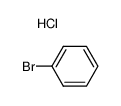
- 16992-19-1
- C6H6BrCl
- 193.46900
- All (0)
- China (0)
- (0)
- 13862-15-2
- ClHHe
- 40.46350
- All (0)
- China (0)
- (0)
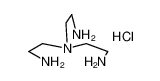
- 44905-58-0
- C6H19ClN4
- 182.69500
- All (0)
- China (0)
- (0)
- 878792-58-6
- C13H21Cl2N2O2
- 309.23200
- All (0)
- China (0)
- (0)
- 14158-33-9
- ClH
- 38.97600
- All (0)
- China (0)
- (0)
- 13473-04-6
- ArClH
- 76.40890
- All (0)
- China (0)
- (0)
- 184970-68-1
- Cl3H
- 107.36700
- All (0)
- China (0)
- (0)
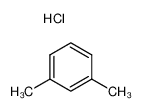
- 109313-72-6
- C8H11Cl
- 142.62600
- All (0)
- China (0)
- (0)
Related Products More >

- 55589-62-3
- CNY 9.0000
- 25kg
- 26048-69-1
- CNY 5.0000
- 25kg
- 97333-46-5
- Request For Quotation
- bags
- 91845-21-5
- Request For Quotation
- 9011-05-6
- Request For Quotation
- 9011-05-6
- Request For Quotation
- 9011-05-6
- Request For Quotation
- 9011-05-6
- Request For Quotation


1. Bond Type Classification: Polar Covalent vs. Ionic
The classification of a chemical bond as ionic or covalent depends on the electronegativity difference (ΔEN) between the bonded atoms. Electronegativity is the ability of an atom to attract shared electrons in a chemical bond. The general guidelines for bond type are:
Nonpolar Covalent: ΔEN ≤ 0.4 (electrons shared equally).
Polar Covalent: 0.4 < ΔEN < 1.7 (electrons shared unequally, creating partial charges).
Ionic: ΔEN ≥ 1.7 (electrons transferred from one atom to another, forming ions).
For HCl:The electronegativity of hydrogen (H) is 2.20 (Pauling scale).The electronegativity of chlorine (Cl) is 3.16.The electronegativity difference is ΔEN = 3.16 – 2.20 = 0.96.Since 0.4 < 0.96 < 1.7, HCl is classified as a polar covalent compound. The shared electron pair in the H–Cl bond is pulled more strongly toward Cl, creating a partial negative charge (δ–) on Cl and a partial positive charge (δ+) on H.
2. Influence of Electronegativity on Bond Polarity
The electronegativity difference between H and Cl dictates the polarity of the H–Cl bond. Chlorine’s higher electronegativity causes the electron density to shift toward Cl, resulting in a dipole moment (a measure of bond polarity). This unequal sharing of electrons makes HCl a polar molecule, with Cl acting as the negative pole and H as the positive pole.
Example:In gaseous HCl (a discrete molecule), the H–Cl bond is polar covalent. This polarity is evident in its physical properties:HCl has a boiling point of -85.05°C, indicating weak intermolecular forces (dipole-dipole interactions) compared to ionic compounds (e.g., NaCl, boiling point ~1,413°C).It is a gas at room temperature, consistent with covalent molecular compounds.
3. Bonding Changes When Dissolved in Water
When HCl is dissolved in water, its behavior shifts dramatically due to ionization: Water molecules, being polar, surround HCl molecules. The partial negative charge on oxygen (in H₂O) attracts the δ+ H in HCl, while the partial positive charge on hydrogen (in H₂O) attracts the δ– Cl. This solvation process weakens the H–Cl bond, leading to complete dissociation into H₃O⁺ (hydronium ions) and Cl⁻ (chloride ions).
Why this is not a "bond type change":The H–Cl bond itself remains polar covalent. However, the environment (water) facilitates its dissociation into ions. This is a chemical reaction, not a transformation of the intrinsic bond type.
In aqueous solution, HCl behaves as a strong acid because it fully ionizes, but the original H–Cl bond was polar covalent in the gas phase.
Example:Aqueous HCl conducts electricity efficiently due to the presence of mobile ions (H₃O⁺ and Cl⁻).The pH of a 1 M HCl solution is approximately 0, indicating high acidity from H₃O⁺ ions.
4. Contrasting HCl with True Ionic Compounds
To clarify, compare HCl with an ionic compound like sodium chloride (NaCl):
NaCl:
ΔEN = 3.16 (Cl) – 0.93 (Na) = 2.23 (ionic bond).
Exists as a crystalline lattice of Na⁺ and Cl⁻ ions even in the solid state.
Melts at 801°C, forming a molten ionic liquid that conducts electricity.
HCl:
Exists as discrete HCl molecules in the gas phase.
Requires a polar solvent (e.g., water) to dissociate into ions.
5. Summary and Key Takeaways
Bond Type: HCl has a polar covalent bond due to an electronegativity difference of 0.96.Electronegativity Role: The Cl atom’s higher electronegativity creates a dipole moment, making the molecule polar.Aqueous Behavior: In water, HCl ionizes completely into H₃O⁺ and Cl⁻ ions, but this is a reaction with water, not a change in the intrinsic H–Cl bond type.
Understanding these distinctions is crucial in chemistry, as they explain properties like solubility, conductivity, and reactivity. While HCl is covalent in its pure form, its interaction with water showcases the dynamic nature of chemical bonds in different environments.
Hydrogen chloride (HCl) is considered a covalent compound. This might seem surprising at first because HCl is highly reactive and forms strong acids when dissolved in water. However, the nature of the bond between hydrogen (H) and chlorine (Cl) atoms is covalent, meaning the electrons are shared between the atoms rather than being transferred completely from one atom to another.
The key to understanding the bond type in HCl lies in the electronegativity difference between hydrogen and chlorine. Electronegativity is a measure of how strongly an atom attracts electrons in a chemical bond.
Hydrogen has an electronegativity of about 2.1.
Chlorine has an electronegativity of about 3.0.
The difference in electronegativity between hydrogen and chlorine is approximately 0.9. This difference is significant but not large enough to classify the bond as ionic.
Ionic Bonds: Typically form when the electronegativity difference is greater than 1.7. In such cases, one atom completely transfers an electron to another atom, resulting in charged ions.
Covalent Bonds: Form when the electronegativity difference is less than 1.7. In these bonds, electrons are shared between atoms.
Since the electronegativity difference between hydrogen and chlorine is 0.9, HCl forms a polar covalent bond. This means that while the electrons are shared, they are not shared equally. The chlorine atom, being more electronegative, attracts the shared electrons more strongly, creating a partial negative charge (δ⁻) on the chlorine atom and a partial positive charge (δ⁺) on the hydrogen atom.
When HCl is dissolved in water, something interesting happens: it dissociates into ions. This process is due to the highly polar nature of water molecules, which can interact strongly with HCl.
1. Dissociation in Water: When HCl dissolves in water, it reacts with water molecules to form hydronium ions (H₃O⁺) and chloride ions (Cl⁻).
In this reaction, the hydrogen atom from HCl transfers to a water molecule, forming the hydronium ion (H₃O⁺), while the chlorine atom becomes a chloride ion (Cl⁻).
2. Ionic Character in Solution: Although HCl is covalent in its molecular form, when dissolved in water, it behaves as if it were ionic. The resulting solution is highly conductive because of the presence of free-moving ions (H₃O⁺ and Cl⁻).
Bond Type: Hydrogen chloride (HCl) is a polar covalent compound due to the electronegativity difference between hydrogen and chlorine (0.9).
Electronegativity Influence: The electronegativity difference causes an unequal sharing of electrons, resulting in a polar covalent bond with a partial positive charge on hydrogen and a partial negative charge on chlorine.
Behavior in Water: When dissolved in water, HCl dissociates into ions (H₃O⁺ and Cl⁻), making the solution highly conductive. This behavior is due to the interaction between the polar HCl molecules and the polar water molecules, which facilitates ion formation.
So, while HCl is covalent in its molecular form, its behavior in water gives it ionic characteristics. This is why HCl is such a strong acid in aqueous solutions.
An ionic bond is a type of chemical bond that involves a metal and a nonmetal ion (or polyatomic ions such as ammonium) through electrostatic attraction. In contrast, a covalent bond involves the sharing of electron pairs between atoms. These electron pairs are known as shared pairs or bonding pairs, and the stable balance of attractive and repulsive forces between atoms, when they share electrons, is known as covalent bonding.
The nature of the bond in HCl is influenced by the electronegativity difference between hydrogen and chlorine. Electronegativity is a measure of the tendency of an atom to attract a bonding pair of electrons. The electronegativity values for hydrogen and chlorine are approximately 2.1 and 3.0, respectively. This results in an electronegativity difference of 0.9. According to the general guidelines, an electronegativity difference of less than 0.5 typically indicates a nonpolar covalent bond, while a difference between 0.5 and 1.7 indicates a polar covalent bond. An electronegativity difference greater than 1.7 usually suggests an ionic bond. Since the difference in HCl is 0.9, it falls into the category of a polar covalent bond. This means that the electrons in the H-Cl bond are not shared equally. The chlorine atom, being more electronegative, attracts the shared electron pair more strongly, resulting in a partial negative charge (δ-) on the chlorine and a partial positive charge (δ+) on the hydrogen.
When HCl is dissolved in water, its bonding nature appears to change due to the interaction with water molecules. Water is a polar solvent, meaning it has a partial positive charge on the hydrogen atoms and a partial negative charge on the oxygen atom. When HCl dissolves in water, the H-Cl bond essentially breaks, and the hydrogen ion (H⁺) and chloride ion (Cl⁻) separate. The hydrogen ion (H⁺) is highly attracted to the oxygen atom of a water molecule, forming a hydronium ion (H₃O⁺). This process is known as ionization. The chloride ion (Cl⁻) remains in solution as a free ion. Although the original H-Cl covalent bond is disrupted in this process, it is important to note that the initial bond in HCl gas is still covalent. The ionization in water is a result of the strong interaction between the polar HCl molecule and the polar water molecules, rather than a change in the intrinsic nature of the HCl bond itself.
To understand the bonding nature of HCl and its behavior in different environments, it is essential to consider both the intrinsic properties of the molecule and the influence of external factors such as solvents. For educational purposes, it is useful to study the periodic table and the electronegativity trends to predict bond types. Additionally, conducting experiments to observe the behavior of HCl in various solvents can provide practical insights. For example, comparing the conductivity of HCl solutions in water versus a nonpolar solvent like hexane can demonstrate the ionization process and the importance of solvent polarity.
In summary, hydrogen chloride (HCl) is a covalent compound with a polar covalent bond due to the electronegativity difference between hydrogen and chlorine. When dissolved in water, HCl ionizes into H⁺ and Cl⁻ ions due to the interaction with water molecules, but its original bond remains covalent in nature. Understanding these concepts requires a combination of theoretical knowledge and experimental observation.