


 Home
Home
Hi, I'd like to ask—Is hydrogen fluoride (HF) polar? How does the electronegativity difference between H and F affect its polarity? What factors determine molecular polarity in covalent compounds? Thanks!
Is Hydrogen Fluoride (HF) a Polar Molecule?
Related Encyclopedia

- 14333-26-7
- DF
- 21.01250
- All (0)
- China (0)
- (0)
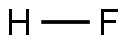
- 7664-39-3
- FH
- 20.01
- All (0)
- China (0)
- (0)
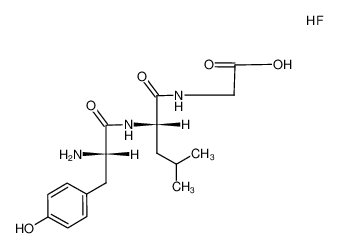
- 118892-05-0
- C17H26FN3O5
- 371.40400
- All (0)
- China (0)
- (0)
- 144124-50-5
- ClHKr
- 120.25900
- All (0)
- China (0)
- (0)
- 328005-51-2
- FHRn
- 242.00600
- All (0)
- China (0)
- (0)
- 7789-29-9
- F2HK
- 78.1
- All (0)
- China (0)
- (0)
- 79240-97-4
- FHXe
- 151.29900
- All (0)
- China (0)
- (0)
- 63439-17-8
- FHLi
- 26.94730
- All (0)
- China (0)
- (0)
- 163731-16-6
- ArFH
- 59.95430
- All (0)
- China (0)
- (0)

- 175699-66-8
- FH3S
- 54.08720
- All (0)
- China (0)
- (0)
Related Products More >

- 55589-62-3
- CNY 9.0000
- 25kg
- 26048-69-1
- CNY 5.0000
- 25kg
- 9003-05-8
- USD 45.0000
- 25kg
- 91845-21-5
- Request For Quotation
- 9011-05-6
- Request For Quotation
- 9011-05-6
- Request For Quotation
- 9011-05-6
- Request For Quotation
- 9011-05-6
- Request For Quotation


How does the electronegativity difference between H and F affect its polarity?
The key factor driving HF’s polarity is the significant electronegativity difference between hydrogen and fluorine. Electronegativity is a measure of an atom’s ability to attract electrons in a chemical bond. Fluorine is the most electronegative element on the periodic table, with a value of 3.98 (on the Pauling scale), while hydrogen has an electronegativity of 2.20. This large difference (1.78) means that fluorine pulls the shared electrons much more strongly toward itself than hydrogen does. As a result, the fluorine atom gains a partial negative charge (δ⁻), and the hydrogen atom gains a partial positive charge (δ⁺), creating a dipole moment. This dipole moment is what defines HF as a polar molecule.
To put this in perspective, covalent bonds are typically considered polar when the electronegativity difference between atoms is between 0.5 and 1.7. Differences greater than 1.7 often indicate ionic bonding, but because hydrogen and fluorine are nonmetals, their bond remains covalent—though highly polar. This extreme electronegativity difference makes HF a particularly strong example of a polar covalent compound.
What factors determine molecular polarity in covalent compounds?
Molecular polarity in covalent compounds depends on two main factors: electronegativity differences between bonded atoms and molecular geometry (shape). Let’s break these down:
1. Electronegativity Differences:
As seen in HF, a significant difference in electronegativity creates polar bonds. However, even if a molecule contains polar bonds, the overall molecule may be nonpolar if the bond polarities cancel out due to symmetry.
For example, carbon dioxide (CO₂) has polar C=O bonds (electronegativity difference: ~1.0), but the linear geometry of the molecule causes the two bond dipoles to point in opposite directions, canceling each other out. This results in a nonpolar molecule overall.
2. Molecular Geometry:
The three-dimensional arrangement of atoms in a molecule determines how individual bond dipoles interact. If a molecule has a symmetrical shape (e.g., linear, trigonal planar, tetrahedral with identical substituents), the bond dipoles may cancel, leading to a nonpolar molecule. If the shape is asymmetrical, the bond dipoles may not cancel, resulting in a polar molecule.
Consider water (H₂O): The O-H bonds are polar (electronegativity difference: ~1.4), and the molecule has a bent (V-shaped) geometry. The asymmetrical shape means the bond dipoles do not cancel, creating a net dipole moment and making H₂O a polar molecule.
Another example is ammonia (NH₃), which has a trigonal pyramidal shape. The polar N-H bonds and asymmetrical geometry result in a net dipole, making NH₃ polar.
3. Dipole Moment and Molecular Symmetry:
The dipole moment is a quantitative measure of molecular polarity, expressed in Debyes (D). It takes into account both the magnitude of the charge separation and the distance between the charges.
Molecules with zero dipole moments are nonpolar, while those with nonzero values are polar. Symmetry is crucial here: even if a molecule has polar bonds, if it is highly symmetrical (e.g., BF₃, a trigonal planar molecule with polar B-F bonds), the individual dipoles will cancel, resulting in a nonpolar molecule.
4. Bond Polarity vs. Molecular Polarity:
It’s important to distinguish between bond polarity (a property of individual bonds) and molecular polarity (a property of the entire molecule). A molecule can have polar bonds but still be nonpolar overall if the bonds are arranged symmetrically.
For instance, carbon tetrachloride (CCl₄) has four polar C-Cl bonds, but its tetrahedral geometry ensures the bond dipoles are evenly distributed in three dimensions, canceling each other and making the molecule nonpolar.
Applying These Factors to HF:
In hydrogen fluoride, the linear molecular geometry (simply a two-atom molecule) means there is no symmetry to cancel the bond dipole. The single polar H-F bond directly translates to a polar molecule. The absence of other atoms or bonds means the entire molecule’s polarity is determined solely by the electronegativity difference between H and F, resulting in a strong dipole moment (approximately 1.91 D).
Why Does Polarity Matter?
The polarity of HF has significant real-world implications. Polar molecules like HF tend to dissolve well in polar solvents (e.g., water) due to dipole-dipole interactions and hydrogen bonding. HF is highly soluble in water and forms hydrofluoric acid, a solution with unique properties, including its ability to etch glass. Additionally, the polarity contributes to HF’s relatively high boiling point (19.5°C) compared to other hydrogen halides like HCl (-85°C), as stronger intermolecular forces (specifically hydrogen bonding) arise from the molecule’s dipole.
Common Misconceptions:
Some might assume that all diatomic molecules are nonpolar, but this is only true for homonuclear diatomics like H₂ or O₂, where electronegativity differences are zero. Heteronuclear diatomics like HF or HCl are inherently polar due to electronegativity differences.
Another误区 (myth) is confusing bond type with molecular polarity. While HF’s bond is highly polar, it remains covalent, not ionic, despite the large electronegativity difference. Ionic bonds typically form between metals and nonmetals, whereas HF consists of two nonmetals, so electron transfer does not occur completely, maintaining a covalent (though polar) bond.
Summary of Key Points:
Is HF polar? Yes, due to the large electronegativity difference between H and F and its linear geometry, which allows a net dipole moment.
Electronegativity role: Fluorine’s much higher electronegativity creates a polar covalent bond, with F carrying a partial negative charge and H a partial positive charge.
Molecular polarity factors: Electronegativity differences determine bond polarity, while molecular geometry (shape) and symmetry determine whether these bond dipoles cancel out, affecting overall molecular polarity.
By understanding these factors, you can predict the polarity of many covalent compounds, which is fundamental in chemistry for explaining solubility, intermolecular forces, and chemical reactivity.
Definition of Polarity in Molecules
Polarity in molecules refers to the distribution of electric charge within the molecule. A polar molecule has an uneven distribution of charge, resulting in regions of partial positive and partial negative charge. This occurs due to differences in electronegativity between the atoms bonded together.
How Electronegativity Difference Affects Polarity in HF
The polarity of hydrogen fluoride (HF) is primarily due to the significant difference in electronegativity between hydrogen (H) and fluorine (F). Fluorine is the most electronegative element on the periodic table, with an electronegativity value of 3.98, while hydrogen has an electronegativity of 2.20. This large difference means that fluorine attracts the shared electrons in the H-F bond more strongly than hydrogen does. As a result, the electrons spend more time closer to the fluorine atom, creating a partial negative charge (δ⁻) on the fluorine and a partial positive charge (δ⁺) on the hydrogen. This separation of charge makes HF a polar molecule.
Factors Determining Molecular Polarity in Covalent Compounds
1. Electronegativity Difference
The primary factor determining molecular polarity is the difference in electronegativity between the bonded atoms. If the electronegativity difference is significant (typically greater than 0.5), the bond is polar, and the molecule is likely to be polar. In HF, the large electronegativity difference between H and F results in a polar bond and a polar molecule.
2. Molecular Geometry
The shape of the molecule also plays a crucial role in determining its overall polarity. Even if individual bonds are polar, the overall molecule may be nonpolar if the bond dipoles cancel each other out due to symmetry. For example, carbon dioxide (CO₂) has polar C=O bonds, but the linear geometry of the molecule means the bond dipoles cancel out, resulting in a nonpolar molecule. In the case of HF, the molecule is linear (H-F), and there is only one bond, so the polarity of the bond directly translates to the polarity of the molecule.
3. Dipole Moment
The dipole moment is a quantitative measure of the polarity of a molecule. It is calculated as the product of the charge difference and the distance between the centers of positive and negative charge. A larger dipole moment indicates a more polar molecule. HF has a significant dipole moment due to the large electronegativity difference and the linear arrangement of the molecule.
Solutions and Applications
1. Understanding and Predicting Polarity
To determine whether a covalent compound is polar, one should first look at the electronegativity values of the atoms involved. If there is a significant difference, the bond is likely polar. Next, consider the molecular geometry to see if the bond dipoles cancel out. For example, in water (H₂O), the bent shape of the molecule means the bond dipoles do not cancel, resulting in a polar molecule.
2. Applications of Polar Molecules
Polar molecules like HF have unique properties that make them useful in various applications. For example, HF is highly soluble in water due to its polarity and ability to form hydrogen bonds. It is used in the etching of glass, the production of fluorides, and as a strong acid in chemical reactions. However, HF is also highly corrosive and toxic, so it must be handled with care.
As a result, the electron density in the HF molecule is shifted towards the fluorine atom, creating a dipole moment. The fluorine end of the molecule becomes partially negative (δ⁻), while the hydrogen end becomes partially positive (δ⁺). This separation of charge makes HF a polar molecule.
The polarity of a covalent compound is determined by several key factors:
1. Electronegativity Difference
The most significant factor is the difference in electronegativity between the bonded atoms. A large electronegativity difference typically results in a polar bond. For example, in HF, the large difference between hydrogen and fluorine leads to a highly polar bond.
2. Bond Polarity vs. Molecular Polarity
While bond polarity is important, the overall molecular polarity also depends on the molecular geometry. A molecule can have polar bonds but still be nonpolar if the dipoles cancel each other out due to symmetry. For example, carbon dioxide (CO₂) has two polar C=O bonds, but the linear geometry of the molecule means the dipoles cancel out, making CO₂ nonpolar.
In contrast, HF has a simple diatomic structure with only one bond, so the polarity of the bond directly translates to the polarity of the molecule.
3. Molecular Geometry
The shape of the molecule plays a crucial role in determining its overall polarity. Symmetrical molecules with polar bonds can be nonpolar if the dipoles are evenly distributed and cancel each other out. For example, methane (CH₄) has four polar C-H bonds, but the tetrahedral geometry means the dipoles cancel out, making methane nonpolar.
Asymmetric molecules with polar bonds are more likely to be polar. For example, water (H₂O) has a bent geometry with two polar O-H bonds. The dipoles do not cancel out, resulting in a polar molecule.
In summary, hydrogen fluoride (HF) is a polar molecule due to the significant electronegativity difference between hydrogen and fluorine. This difference causes a shift in electron density, creating a dipole moment. The polarity of covalent compounds is determined by factors such as electronegativity differences, bond polarity, and molecular geometry. Understanding these factors helps predict and explain the behavior of molecules in various chemical and physical contexts.