


 Home
Home
I found an old container of boric acid in my cabinet, and I’m wondering if it’s still safe to use. Could using expired boric acid cause it to lose effectiveness or even be harmful? Does it change chemically over time? Will it still work the same way for cleaning, pest control, or other home uses? Is there any risk if it comes in contact with skin or surfaces after the expiration date? Basically, what should I expect if I decide to use boric acid that’s past its prime?
What Happens If I Use Expired Boric Acid?
Related Encyclopedia
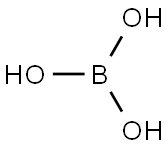
- 11113-50-1
- BH3O3
- 61.83
- All (30)
- China (20)
- (30)
- 7440-42-8
- B
- 10.81
- All (41)
- China (10)
- (41)
- 139701-24-9
- B3H2
- 35.04380
- All (41)
- China (10)
- (41)
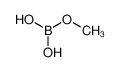
- 68498-84-0
- CH5BO3
- 75.85960
- All (0)
- China (0)
- (0)
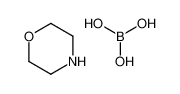
- 67859-78-3
- C4H12BNO4
- 148.95300
- All (0)
- China (0)
- (0)
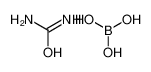
- 68072-56-0
- CH7BN2O4
- 121.88800
- All (0)
- China (0)
- (0)
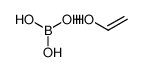
- 55199-96-7
- C2H7BO4
- 105.88600
- All (0)
- China (0)
- (0)
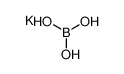
- 20786-60-1
- BH3KO3
- 100.93100
- All (0)
- China (0)
- (0)
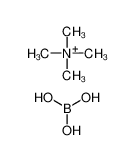
- 58272-25-6
- C4H15BNO3+
- 135.97800
- All (0)
- China (0)
- (0)
- 70331-86-1
- C6H7BO4
- 153.92800
- All (0)
- China (0)
- (0)
Related Products More >

- 12069-32-8
- Request For Quotation
- 320#kg
- 10043-11-5
- Request For Quotation
- 1kg
- 10043-11-5
- Request For Quotation
- 25kg
- 10043-11-5
- Request For Quotation
- 1ton
- 10043-11-5
- Request For Quotation
- 1kg
- 10043-11-5
- Request For Quotation
- 25kg
- 10043-11-5
- Request For Quotation
- 1ton
- 10294-34-5
- Request For Quotation
- 10kg


If you were thinking of using it for health reasons, like a skin treatment or vaginal suppository, expired boric acid isn’t recommended because it could irritate or not work properly. For regular household tasks, a little past the expiration date isn’t a huge deal, but fresh is always more reliable.
The key distinction between expired and non-expired boric acid lies in consistency rather than toxicity. Unlike some chemicals that break down into harmful byproducts, boric acid’s degradation, if any, is usually minimal and non-toxic. However, its efficacy can diminish; for example, in medical settings where precise concentrations are critical, expired boric acid solutions might not maintain the required antimicrobial activity, making them unreliable for wound care or ophthalmic use.
A common misconception is that expired boric acid becomes dangerous, but this is rarely the case. The primary concern is functional: using it in scenarios where predictable results are necessary, such as in laboratory experiments or industrial processes, could lead to inaccurate outcomes due to reduced reactivity or altered solubility. It’s also worth noting that while boric acid itself is low in acute toxicity, improper storage—regardless of expiration—can introduce contaminants, which is a separate issue from the expiration itself.
From a practical standpoint, in household and industrial settings, using boric acid past its expiration date often means it may simply be less efficient. For pest control, for instance, ants or roaches might not be affected as strongly if the boric acid has absorbed moisture or degraded slightly, because the mechanism relies on ingestion of a specific active form. In cleaning or preservative contexts, it may not dissolve or interact as effectively with surfaces, which can diminish its utility. The risks to humans or pets under normal contact scenarios remain low, but inhalation of powder or ingestion should always be avoided, expired or not.
In medical or personal care contexts, the concerns are more pronounced. Boric acid is used in controlled forms for treating certain infections, and using an expired product could lead to irritation, reduced effectiveness, or unpredictable local reactions. The safety margin decreases because even minor chemical changes or contamination can become significant when applied to sensitive tissues. Proper storage, such as keeping it dry and sealed, can mitigate some deterioration, but it doesn’t guarantee full potency indefinitely.
Overall, the implications of using expired boric acid depend heavily on the intended application and storage history. While the chemical itself doesn’t suddenly become dangerous after the printed date, its effectiveness may be compromised, particularly in precise applications. Careful consideration of context and physical inspection of the product—checking for moisture, discoloration, or unusual texture—helps in deciding whether it is suitable for continued use.
The key risk lies in its unreliable performance when used for medical or pest control purposes. For instance, in treating recurrent vaginal yeast infections, expired boric acid suppositories might not maintain the precise acidity required to inhibit Candida growth effectively. This could lead to treatment failure or prolonged discomfort. Similarly, in pest management, degraded boric acid may fail to act as a lethal stomach toxin for insects like cockroaches, as its altered consistency might not adhere properly to bait or disperse as intended.
While expired boric acid isn’t typically hazardous in terms of acute poisoning, using it introduces uncertainty. Its changed physical form might cause inconsistent application or dosing, particularly in sensitive uses. It’s advisable to replace expired products to ensure reliability, as stability is integral to its function. Proper storage in a cool, dry place can help extend its usable lifespan, but expiration dates should generally be respected for optimal results.