


 Home
Home
I’ve heard that boric acid can be used to deal with all kinds of bugs around the house, but I’m not sure if it really works on fleas. Can it actually get rid of them, or is it more for ants and cockroaches? How safe is it to use around pets and children if it is effective? Are there specific ways to apply it that make it work better, like sprinkling it on carpets or bedding? I’m curious if it’s really a good option for dealing with a flea problem, or if there are better alternatives out there?
Does Boric Acid Kill Fleas? How Effective Is It?
Related Encyclopedia
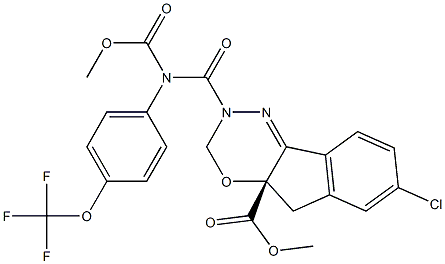
- 174060-41-4
- C22H17ClF3N3O7
- 527.8344896
- All (20)
- China (0)
- (20)
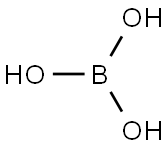
- 11113-50-1
- BH3O3
- 61.83
- All (30)
- China (20)
- (30)
- 68498-84-0
- CH5BO3
- 75.85960
- All (0)
- China (0)
- (0)
- 67859-78-3
- C4H12BNO4
- 148.95300
- All (0)
- China (0)
- (0)
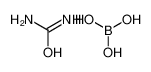
- 68072-56-0
- CH7BN2O4
- 121.88800
- All (0)
- China (0)
- (0)
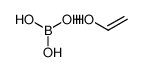
- 55199-96-7
- C2H7BO4
- 105.88600
- All (0)
- China (0)
- (0)
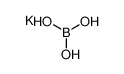
- 20786-60-1
- BH3KO3
- 100.93100
- All (0)
- China (0)
- (0)
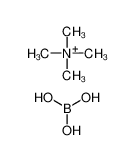
- 58272-25-6
- C4H15BNO3+
- 135.97800
- All (0)
- China (0)
- (0)
- 70331-86-1
- C6H7BO4
- 153.92800
- All (0)
- China (0)
- (0)
- 145384-46-9
- BDH2O3
- 62.83920
- All (0)
- China (0)
- (0)
Related Products More >
- 96958-96-2
- Request For Quotation
- 25kg
- 96958-96-2
- Request For Quotation
- 1ton
- 96958-96-2
- Request For Quotation
- 25kg
- 96958-96-2
- Request For Quotation
- 1ton
- 96958-96-2
- Request For Quotation
- 25kg
- 96958-96-2
- Request For Quotation
- 1kg
- 96958-96-2
- Request For Quotation
- 25kg
- 96958-96-2
- Request For Quotation
- 1ton


You have to be careful because boric acid is a chemical, so you don’t want pets or kids eating it. Wearing gloves while applying it is a good idea. Some folks find it helpful for smaller infestations, but if the problem is bad, you might still need other treatments like sprays or flea shampoos. It’s kind of a handy trick, but not a total flea solution on its own.
In practical application, boric acid is often deployed as a finely milled powder in areas where flea larvae and adults reside, such as carpets, pet bedding, or floor cracks. The powder’s low toxicity to mammals allows for use in domestic settings with careful handling. For instance, when sprinkled thinly and brushed into carpet fibers, it remains active for extended periods, breaking the flea life cycle by targeting larvae before they mature. Its stability ensures prolonged effectiveness without releasing volatile compounds.
The success of boric acid relies on correct implementation; excessive application can reduce efficacy by forming clumps that fleas avoid. Moreover, it functions best in dry environments, as humidity may diminish its desiccant potential. When used appropriately, it integrates into broader pest management strategies, complementing regular cleaning and pet treatments. This approach underscores the importance of mechanical control methods in ecological pest management, offering a residual defense with minimal chemical intervention.
From a chemical perspective, boric acid is relatively stable, slightly soluble in water, and weakly acidic. Its low solubility allows it to remain effective over extended periods in dry environments, maintaining its insecticidal potential. In practical household applications, it is often used as a preventive or supplementary method against flea infestations. However, its effectiveness is influenced by environmental conditions such as humidity and surface type, as excessive moisture can reduce its drying capacity. In industrial and pest management contexts, boric acid is valued for being low-cost, easy to apply, and less prone to inducing resistance in pests compared to synthetic insecticides.
Beyond the immediate insecticidal function, boric acid also intersects with health and safety considerations. While it is effective against fleas, careful application is necessary because ingestion or prolonged contact can pose risks to humans and pets. Its use in controlled, localized doses mitigates these hazards, making it suitable for targeted pest control rather than widespread application. The compound’s versatility extends into other areas such as antiseptics, flame retardants, and glass manufacturing, reflecting a broader interdisciplinary significance.
Understanding how boric acid interacts with flea physiology offers insight into its broader ecological and practical relevance. By exploiting a basic physical property rather than relying on neurotoxins, boric acid represents a strategy that combines chemical stability with biological impact. Its application exemplifies a convergence of chemistry, entomology, and everyday problem-solving, illustrating how a relatively simple compound can have wide-ranging effects across multiple domains.
The effectiveness of boric acid against fleas also relates to its persistence in the environment. Unlike many organic insecticides that break down quickly under light or moisture, boric acid remains stable in dry conditions, providing long-term control. It can be applied to carpets, cracks, and other areas where flea larvae develop, targeting not just adult fleas but also the immature stages. Larvae, which feed on organic debris, may ingest boric acid while foraging, preventing them from maturing into adults. This differs from treatments that only target adult fleas, which can leave a residual population to repopulate the area. However, it is important to note that boric acid’s efficacy drops significantly in wet environments, as moisture causes the particles to clump, reducing their ability to adhere to fleas or be ingested.
A common misconception is that boric acid is highly toxic to pets or humans, but when used as directed, its risk is relatively low. Unlike organophosphates, which can cause acute toxicity through skin absorption or inhalation, boric acid has low systemic toxicity. Mammals have different metabolic pathways that prevent the same enzyme disruption seen in fleas, and significant toxicity typically requires large ingestion amounts. However, this does not mean it is entirely harmless—direct contact with large quantities can cause skin irritation, and ingestion by small pets like cats or dogs in excessive amounts may lead to gastrointestinal issues. This distinction is crucial: boric acid is not a non-toxic solution but a low-risk option when compared to more hazardous alternatives, making it a viable choice for integrated pest management strategies focused on reducing chemical exposure.