


 Home
Home
Hi, I’ve been curious about something in chemistry and was hoping you could help me. I know nitric acid is a very strong acid used in labs for dissolving metals, but I’m wondering about gold. Can pure nitric acid actually dissolve gold, or does gold resist it? Are there specific conditions needed for it to react with gold, or is it completely safe from nitric acid? How does this compare to other acids when it comes to dissolving metals?
Can Nitric Acid Dissolve Gold or Is It Resistant to Acids?
Related Encyclopedia
- 7440-57-5
- Au
- 196.97
- All (29)
- China (5)
- (29)

- 90992-82-8
- AuPt
- 392.04500
- All (0)
- China (0)
- (0)

- 20091-45-6
- Au
- 199.97100
- All (0)
- China (0)
- (0)
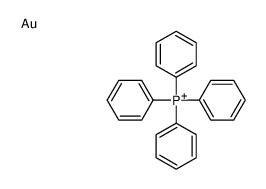
- 30142-19-9
- C24H20AuP+
- 536.35600
- All (0)
- China (0)
- (0)

- 53240-52-1
- AuCr
- 248.96300
- All (0)
- China (0)
- (0)

- 51434-62-9
- AuK
- 236.06500
- All (0)
- China (0)
- (0)
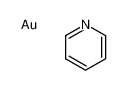
- 514789-98-1
- C5H5AuN
- 276.06600
- All (0)
- China (0)
- (0)
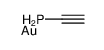
- 193358-81-5
- C2H3AuP
- 254.98600
- All (0)
- China (0)
- (0)

- 14320-93-5
- Au
- 194.96500
- All (0)
- China (0)
- (0)
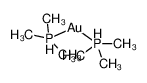
- 38614-53-8
- C6H20AuP2
- 351.13700
- All (0)
- China (0)
- (0)
Related Products More >

- 108-78-1
- USD 4.5000
- 25kg
- 13453-07-1
- Request For Quotation
- 1L
- 94232-38-9
- Request For Quotation
- 90597-79-8
- Request For Quotation
- 9000-69-5
- Request For Quotation
- 898543-06-1
- Request For Quotation
- 866395-16-6
- Request For Quotation
- 852445-83-1
- Request For Quotation


Gold can only be dissolved by a mixture known as aqua regia (Latin for “royal water”), which combines concentrated nitric acid and concentrated hydrochloric acid (HCl) in a 1:3 volume ratio. In this mixture, HNO₃ acts as the oxidizer, finally converting Au atoms to Au³⁺ ions, while HCl provides chloride ions (Cl⁻) that bind to Au³⁺ to form the soluble tetrachloroaurate complex ion ([AuCl₄]⁻). This complexation stabilizes the Au³⁺ ions, driving the oxidation reaction forward— a process that pure HNO₃ cannot achieve, as it lacks Cl⁻ ions to form such soluble complexes. This distinction is vital in industrial processes: aqua regia is used to refine gold (separating it from impurities like silver or copper, which dissolve in HNO₃ alone) and in analytical chemistry to quantify gold in samples, while pure HNO₃ is used to dissolve base metals without affecting gold—enabling selective purification.
A common misunderstanding is assuming all strong acids can dissolve gold, or that concentrated HNO₃ alone suffices. Another misconception is conflating aqua regia with HNO₃; the former’s ability to dissolve gold relies on the synergistic action of two acids, not just HNO₃’s oxidizing properties. For professionals like metallurgists or chemical analysts, recognizing this limitation ensures proper selection of reagents: using pure HNO₃ to remove base metal contaminants from gold artifacts avoids damaging the gold itself, while aqua regia is reserved for cases where complete gold dissolution is required (e.g., recycling gold from electronic waste). This knowledge also underpins the historical value of gold—its resistance to dissolution by most acids (including HNO₃) contributes to its durability and role as a store of value, distinguishing it from more reactive metals that corrode or dissolve easily.
In practical chemistry, this property of gold is critical. For instance, jewelers or metallurgists can safely clean gold with nitric acid without fearing that the metal itself will dissolve, although other metals in an alloy might react. To actually dissolve gold, one must employ a mixture called aqua regia, a combination of nitric acid and hydrochloric acid, which creates a highly reactive environment where gold forms chloroauric acid. This principle is utilized in refining gold from ore, recycling electronic components, and in laboratory demonstrations of metal reactivity. Understanding why gold resists simple nitric acid but succumbs to aqua regia illustrates broader concepts in inorganic chemistry, including redox potentials and ligand coordination.
So while a student or lab technician might initially assume all strong acids dissolve metals, gold exemplifies an exception due to its chemical inertness. Its behavior provides a clear example of how electronic structure dictates reactivity and explains why gold retains its value and physical integrity in environments that would corrode lesser metals.
However, the combination of nitric acid with hydrochloric acid forms aqua regia, a mixture capable of dissolving gold. In this system, nitric acid oxidizes chlorine ions (Cl⁻) from hydrochloric acid into chlorine gas (Cl₂) or other reactive chlorine species, which then complex with gold atoms. The gold is oxidized from its elemental state (Au⁰) to gold(III) ions (Au³⁺), forming soluble chloroauric acid (HAuCl₄). This synergy between the acids overcomes gold’s inertness, illustrating how chemical interactions can be amplified through collaborative mechanisms rather than isolated reactions.
Industrially, this principle is pivotal in refining gold and recovering precious metals from electronic waste. The selective dissolution of gold using aqua regia allows for its extraction from alloys or circuit boards without affecting less reactive metals like copper or silver. In analytical chemistry, aqua regia is used to dissolve gold samples for spectroscopic analysis, ensuring accurate quantification of the metal. Medically, while nitric acid itself has limited direct applications with gold, its role in refining supports the production of gold-based medical implants or radiopharmaceuticals, where purity is paramount.
The broader significance lies in understanding the limits of chemical reactivity and the power of combinatorial chemistry. Gold’s resistance to nitric acid alone underscores the importance of material selection in engineering, while its dissolution in aqua regia highlights how innovative mixtures can solve problems beyond the capabilities of individual components. This duality informs advancements in both fundamental science and practical technologies, from sustainable mining to nanomedicine.