


 Home
Home
Hello, can I check something with you? I recently noticed the name “sodium dichloroisocyanurate” on a disinfectant label, and it made me wonder what it actually is. Is this chemical the same as regular bleach, or does it work in a different way? Could it be stronger or safer compared to liquid bleach that we usually use at home? And where might people commonly come across it in real life, such as in pools, cleaning tablets, or even household sanitizers?
Is Sodium Dichloroisocyanurate Bleach and How Does It Work in Daily Life?
Related Encyclopedia

- 22537-15-1
- Cl
- 35.45300
- All (0)
- China (0)
- (0)
- 32745-17-8
- Cl2
- 71.93480
- All (3)
- China (3)
- (3)

- 7782-50-5
- Cl2
- 70.91
- All (3)
- China (3)
- (3)
- 39705-20-9
- Cl2
- 73.93180
- All (3)
- China (3)
- (3)
- 30680-79-6
- Cl2
- 69.93770
- All (3)
- China (3)
- (3)

- 13932-10-0
- ClO3
- 83.45120
- All (0)
- China (0)
- (0)
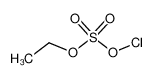
- 104184-87-4
- C2H5ClO4S
- 160.57700
- All (0)
- China (0)
- (0)

- 12133-63-0
- ClO4
- 99.45060
- All (0)
- China (0)
- (0)
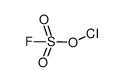
- 13997-90-5
- ClFO3S
- 134.51500
- All (0)
- China (0)
- (0)
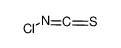
- 16681-13-3
- CClNS
- 93.53540
- All (0)
- China (0)
- (0)
Related Products More >

- 7778-54-3
- USD 50.0000
- 45kg
- 7782-50-5
- Request For Quotation
- 1ton
- 7782-50-5
- Request For Quotation
- 25kg
- 7782-50-5
- Request For Quotation
- 25kg
- 7782-50-5
- Request For Quotation
- 1ton
- 10049-04-4
- Request For Quotation
- 1ton


You’ll often see it in swimming pool treatments, emergency water purification tablets, or cleaning tablets for things like toilets. Because it’s more stable in solid form, it’s easier to store, carry, and dose compared with liquid bleach, which can spill or lose strength over time. For everyday people, this means you might use it without even realizing, especially if you’ve ever dropped a pool tablet into the water or used a compact cleaner at home. It’s effective, practical, and simply another way to make sure chlorine does its job of keeping things clean and safe.
Chemically, NaDCC’s disinfection prowess stems from HOCl’s ability to penetrate microbial cell walls, oxidizing proteins and disrupting DNA replication. This broad-spectrum activity targets bacteria, viruses, and fungi, including spores and enveloped pathogens like influenza and SARS-CoV-2. Physically, its low toxicity and minimal corrosivity compared to chlorine gas or concentrated hypochlorite solutions make it safer for household and industrial use, though prolonged skin contact may cause irritation due to residual chlorine.
In daily life, NaDCC dominates as a tablet or powder disinfectant for water purification, swimming pools, and sanitary surfaces, offering precise dosing and portability. Industrially, it sterilizes cooling towers, food processing equipment, and textiles, where its compatibility with organic materials minimizes material degradation. Medically, NaDCC’s role expands to wound care and instrument decontamination, leveraging its rapid action against antibiotic-resistant bacteria. Environmentally, its breakdown product, cyanuric acid, persists in water systems, potentially contributing to eutrophication if not managed, yet its lower chlorinated organic byproduct formation compared to sodium hypochlorite reduces ecological toxicity.
From a cross-disciplinary lens, NaDCC’s applications intersect with public health, chemistry, and engineering. Its adoption in emergency water treatment during disasters underscores its societal impact, while innovations in slow-release formulations aim to optimize chlorine longevity in wastewater management. Thus, NaDCC exemplifies a chemical agent whose molecular design harmonizes efficacy, safety, and versatility, shaping modern hygiene practices across global contexts.
What makes NaDCC distinct is its stability and convenience. While liquid bleach tends to degrade over time and requires careful storage, sodium dichloroisocyanurate is manufactured in solid forms such as tablets, powders, or granules. This solid state ensures a longer shelf life and allows precise dosing, which is why it is preferred in many institutional and emergency settings. When dissolved in water, it releases chlorine gradually, maintaining a controlled disinfecting effect without the rapid loss of strength that liquid bleach often experiences.
In real-world practice, sodium dichloroisocyanurate is used across a wide range of scenarios. It is commonly added to swimming pools to maintain sanitary water conditions, applied in hospitals to disinfect surfaces and medical instruments, and provided in tablet form by humanitarian organizations for drinking water purification during emergencies. These applications highlight its adaptability and reliability, as it offers the germ-killing power of chlorine while being more portable and stable than traditional bleach. Through these examples, it becomes clear that sodium dichloroisocyanurate serves as a practical, modern alternative to liquid bleach in contexts where stability, transport, and precise dosing are critical.
Chemically, SDIC acts by hydrolyzing in water to generate hypochlorous acid (HOCl), the active species responsible for its disinfectant and bleaching effects; HOCl oxidizes organic molecules (e.g., pigments in stains, microbial cell components) to break them down, enabling both stain removal and pathogen inactivation. In professional fields like water treatment, food processing, and healthcare, SDIC’s stability is critical: unlike sodium hypochlorite, which decomposes quickly when exposed to light, heat, or organic matter (leading to reduced efficacy and chlorine gas emissions), SDIC remains stable in solid form (granules or tablets) and releases chlorine gradually, ensuring consistent disinfectant levels over time. This makes it ideal for treating large water volumes (e.g., swimming pools, municipal water supplies) or sanitizing food contact surfaces, where sustained antimicrobial activity is required.
A common misconception is equating SDIC directly to “bleach,” a term often associated with sodium hypochlorite-based products. While both rely on chlorine for bleaching and disinfection, SDIC offers superior stability, lower corrosivity (when used at recommended concentrations), and reduced odor compared to sodium hypochlorite. It also differs from calcium hypochlorite (another chlorinated disinfectant), as SDIC dissolves more completely in water and leaves fewer mineral residues, making it preferable for applications like medical device sanitization where residue buildup could compromise equipment function. In industrial settings, SDIC’s controlled chlorine release minimizes waste and ensures compliance with safety standards, as it reduces the risk of sudden chlorine overexposure— a key advantage over less stable chlorine-based disinfectants in high-demand professional environments.