


 Home
Home
Hi, I’ve noticed that some bottled water brands list sodium bicarbonate in the ingredients, and it got me wondering why it’s there. I know it’s commonly called baking soda and used in cooking, but what role does it play in drinking water? Does it change the taste, the health benefits, or the water’s chemical balance? How does it interact with the water, and why would companies choose to add it instead of other minerals? Could it affect people who are watching their sodium intake?
Why Is Sodium Bicarbonate Added to Bottled Water and What Does It Do?
Related Encyclopedia
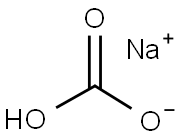
- 144-55-8
- CHNaO3
- 84.01
- All (83)
- China (59)
- (83)
![SODIUM BICARBONATE, [14C]](https://chemcloud-1304660855.cos.ap-shanghai.myqcloud.com/compound/4ca1cb1df0ef47f58653c7f46f805e3b.png?imageMogr2/format/webp)
- 7279-86-9
- CHNaO3
- 86.02000
- All (0)
- China (0)
- (0)
Related Products More >

- CNY Request For Quotation
- CNY Request For Quotation
- CNY Request For Quotation
- 144-55-8
- CNY 100.0000
- 25kg
- 144-55-8
- USD 225.0000
- 25kg
- 144-55-8
- USD 7.5000
- 25kg
- 144-55-8
- Request For Quotation
- 144-55-8
- Request For Quotation
- according to buyer instruction


You might have seen it in mineral or “alkaline” water brands because it gives a subtle mineral boost without affecting flavor too much. It’s generally safe to drink in the amounts used, though people watching their sodium intake might notice it adds a tiny bit of sodium. Essentially, it’s there to make the water taste better and maintain a balanced pH, not as some strong chemical additive.
From a physiological perspective, mildly alkaline water is sometimes marketed for perceived health benefits, such as reducing acid reflux symptoms or balancing bodily pH, though these claims remain debated in medical communities. The buffering capacity of sodium bicarbonate also plays a role in industrial water treatment, where it prevents equipment degradation by counteracting acidic contaminants. In bottled water production, its solubility in water ensures uniform distribution without sedimentation, a critical factor for maintaining product clarity and consumer trust.
A common misunderstanding is equating sodium bicarbonate’s presence with “mineral-enhanced” water. Unlike naturally occurring minerals like calcium or magnesium, sodium bicarbonate is typically added post-treatment to target pH specifically. Its inclusion reflects a blend of culinary, engineering, and marketing considerations: optimizing taste, preventing infrastructure damage, and aligning with consumer preferences for “clean” or “alkaline” water profiles. This multifaceted application underscores sodium bicarbonate’s versatility as a chemical agent, bridging gaps between sensory science, industrial chemistry, and public health perceptions in the bottled water industry.
Beyond pH stabilization, sodium bicarbonate also contributes to a smoother, slightly alkaline taste that many consumers find more refreshing than purely neutral water. For example, in premium bottled mineral waters, adding small amounts of sodium bicarbonate can help achieve a consistent taste profile, ensuring that every bottle from the same brand tastes similar even if the natural water varies. Additionally, it can enhance the water’s perceived “mineral richness” without introducing strong flavors or other chemical additives.
From a practical standpoint, this additive is safe at the concentrations used in bottled water. It’s particularly helpful in preventing slight acidity that could otherwise affect metal bottle linings or packaging, ensuring longer shelf life and better consumer experience. For those monitoring sodium intake, it’s worth noting that the amount of sodium bicarbonate is relatively low, providing functional benefits without significantly impacting dietary sodium levels. Overall, sodium bicarbonate in bottled water serves a dual purpose: stabilizing pH and subtly improving taste and sensory quality.
From a production standpoint, bicarbonate’s functionality distinguishes it from other alkaline additives like calcium carbonate or magnesium hydroxide. While those compounds also increase pH, they can cause cloudiness or sedimentation. Bicarbonate remains soluble and clear, making it ideal for visually appealing bottled water. Moreover, in contrast to simply adding a strong base such as sodium hydroxide (which would raise pH aggressively but offer no buffering against re-acidification, for example from dissolved CO₂), bicarbonate provides a stable, resilient alkalinity.
A common misconception is that its presence signifies “medicinal” or overly processed water. In reality, it is a natural constituent of many mineral waters and is added to reverse-osmosis or distilled waters to reintroduce electrolytes and improve palatability. Its inclusion is a precise engineering choice to achieve a stable, pleasant-tasting product that aligns with the body’s own chemical environment, without introducing unwanted visual or textural elements.