


 Home
Home
As a student or hobbyist engaged in science experiments, I’m seeking trustworthy sources to buy potassium hydroxide for my projects, such as soap-making, pH adjustment, or chemical reactions. Where exactly can I purchase this chemical safely and legally? Are local hardware stores, lab supply shops, or educational material stores likely to carry it? I prioritize suppliers that offer clear safety data sheets (SDS) and proper packaging to ensure safe handling, especially since potassium hydroxide is a corrosive substance. For online options, are there specialized scientific supply platforms or e-commerce sites that cater to educational or hobbyist use? What brands or grades (e.g., reagent grade, technical grade) are suitable for non-commercial experiments, and do they require age verification or special permits to purchase? I want to ensure compliance with local regulations regarding hazardous chemicals and avoid any legal issues. Are there minimum order quantities, and how should I store potassium hydroxide properly after purchase to maintain its purity and safety? Any tips on verifying a supplier’s credibility to avoid low-quality or counterfeit products? I’m hoping to find a reliable source that balances affordability, accessibility, and safety—any insights or personal experiences with purchasing potassium hydroxide for science experiments would be greatly appreciated!
Where Can I Buy Potassium Hydroxide for Science Experiments?
Related Encyclopedia

- 12401-70-6
- HKO
- 56.10560
- All (43)
- China (34)
- (43)
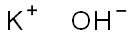
- 1310-58-3
- KOH
- 56.11
- All (43)
- China (34)
- (43)
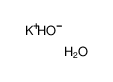
- 26288-25-5
- H3KO2
- 74.12090
- All (0)
- China (0)
- (0)
- 89091-89-4
- HK3O
- 134.30200
- All (0)
- China (0)
- (0)
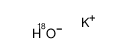
- 100330-18-5
- HKO
- 58.10540
- All (0)
- China (0)
- (0)
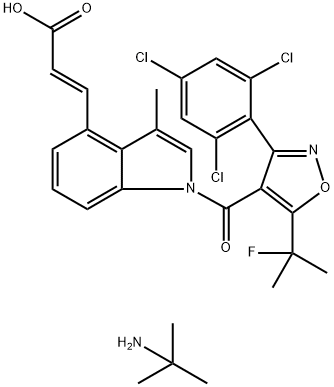
- 1898207-64-1
- C29H29Cl3FN3O4
- 608.92
- All (0)
- China (0)
- (0)
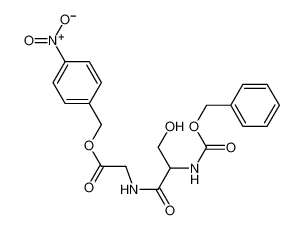
- 26054-98-8
- C20H21N3O8
- 431.39604
- All (0)
- China (0)
- (0)
Related Products More >

- Request For Quotation
- 1310-73-2
- Request For Quotation
- 1310-58-3
- CNY 13.0000
- 25kg
- 1310-58-3
- USD 800.0000
- 25kg
- 108-80-5
- USD 50.0000
- 50kg
- 108-78-1
- USD 4.5000
- 25kg


Online is usually the easiest route. Websites like Amazon or eBay list potassium hydroxide, but stick to reputable sellers with clear SDS (Safety Data Sheet) info and reviews mentioning purity. For lab-grade stuff, try science supply sites like Carolina Biological, Sigma-Aldrich (if you’re okay with higher prices), or even soap-making suppliers like Bramble Berry or Wholesale Supplies Plus. These sites often sell food-grade or USP-grade potassium hydroxide, which is safe for hobbyists.
Most places don’t require permits for small quantities (under 1 lb), but age verification is common—expect to confirm you’re 18+ at checkout. Storage is key: keep it in an airtight container (original packaging is best) away from moisture and metals, and label it clearly. A cool, dry cabinet works; just don’t store it near acids or flammables.
To avoid sketchy suppliers, check for SDS availability, seller reviews mentioning purity, and clear product descriptions (e.g., “99% pure” or “USP grade”). Avoid listings with vague labels or no safety info. Prices vary, but expect to pay $10–$30 for a pound, depending on grade. For soap-making, technical grade is fine; for precise chemistry, spring for reagent grade.
Pro tip: If you’re new to handling it, buy pre-diluted solutions or smaller pellets to minimize risk. And always wear gloves and goggles—this stuff is no joke! Hope this helps you find what you need safely.
First, start with local stores. Some hardware stores like Home Depot or Lowe’s might carry potassium hydroxide, often labeled as “caustic potash” or in drain cleaner formulations (since it’s used for unclogging drains). But check the label carefully—you want pure potassium hydroxide, not a mixed product. Lab supply shops or stores that cater to educational institutions (like Carolina Biological or Fisher Scientific) are better bets if you’re near one. They usually have higher-purity grades and can provide SDS sheets, which are crucial for understanding safety protocols.
For online options, websites like Amazon or eBay do sell it, but be extremely cautious. Look for sellers with high ratings and detailed product descriptions that specify the grade (reagent grade is best for experiments) and packaging. Specialized scientific suppliers like Sigma-Aldrich, VWR, or Chemical Store.com are more reliable for purity and compliance. Many of these sites require you to confirm you’re over 18 or a qualified buyer, but for hobbyist use, most won’t need a special permit unless your local laws are strict. Always check your country/state’s regulations—for example, in the U.S., small quantities for personal use are usually okay, but larger amounts might require reporting.
Grades matter: reagent grade is ideal for precise experiments like pH adjustment or soap-making, while technical grade is cheaper but might have impurities. Avoid using drain cleaner formulations for science projects, as they can contain other chemicals that mess with results. Brands like EMD Millipore or Alfa Aesar are trusted in labs, but for hobbyists, smaller brands like Sky Organics (for soap-making) might be more accessible.
Storage is key: potassium hydroxide is highly hygroscopic (absorbs water), so store it in an airtight container in a cool, dry place, away from acids and organic materials. Use non-metal containers (glass or HDPE plastic) since it reacts with aluminum and other metals. Keep it out of reach of kids/pets, and always wear gloves and goggles when handling—even a small spill can burn skin or damage eyes.
To verify a supplier’s credibility, check if they’re registered with relevant chemical associations or have good reviews from other hobbyists/scientists. Ask for a certificate of analysis (CoA) to confirm purity, especially if you’re doing sensitive experiments. Avoid any seller who won’t provide safety info or ships in unlabeled packaging—that’s a red flag.
Minimum order quantities vary. Online suppliers often have lower MOQs (like 1 pound) for hobbyists, while industrial suppliers might require 50+ pounds. For soap-making, a pound or two should last a while, but for frequent experiments, buying in bulk might save money—just make sure you can store it properly.
Lastly, always follow safety protocols. Even small amounts can be dangerous if mishandled. If you’re unsure about anything (permit requirements, handling procedures), contact your local environmental agency or a chemistry teacher for advice. Happy experimenting, and stay safe!
For physical stores, lab supply shops like Fisher Scientific, Carolina Biological, or even local educational material stores often carry KOH. Hardware stores might stock it in smaller quantities for drain cleaners (look for “lye” or “caustic potash”), but purity can vary, and labels might lack safety info. Lab suppliers are your best bet for reagent-grade KOH, which is ideal for soap-making or precise pH adjustments.
Online, platforms like Amazon (check sellers’ ratings), eBay (but verify purity), or specialized sites like Sciencemadness Shop, Elemental Scientific, or United Nuclear cater to hobbyists. These sites usually provide SDS sheets, proper packaging (plastic jars with airtight lids), and ship hazardous materials safely. Some may require age verification (18+ for chemicals), but no special permits are typically needed for small quantities used in education or research.
For grades, reagent grade (99%+ purity) is best for experiments requiring accuracy, while technical grade (lower purity, cheaper) works for soap-making or general reactions. Avoid industrial-grade stuff meant for industrial use—it might have impurities.
Storage is crucial. Keep KOH in a cool, dry place, away from acids (violent reactions!) and moisture (it absorbs water from the air). Use airtight containers, and label them clearly. Wear gloves and goggles when handling—it’s caustic and can burn skin or eyes.
To verify suppliers, check for clear SDS, contact info, and customer reviews. Avoid sketchy listings with no safety info. Legit suppliers will have return policies if the product is compromised.
Minimum order quantities vary—lab suppliers might sell 100g or 500g jars, while hobbyist sites could offer smaller packs. Compare prices per gram to avoid overpaying.
Personally, I’ve used Fisher Scientific for reagent-grade KOH—they’re reliable, and SDS are always included. For soap-making, Bramble Berry sells KOH in hobbyist-friendly sizes with clear instructions. Always triple-check local regulations (some places restrict shipments of certain chemicals), and prioritize safety over cost. Happy experimenting!