


 Home
Home
I'm studying plant biology, and I keep getting stuck on the concept of photosynthesis. I know it's crucial for plants to survive, but I'm really confused about the overall chemical equation. What exactly are the reactants and products? I've heard that water, carbon dioxide, and sunlight are involved, but how do they come together in the equation? And where does chlorophyll fit in? Does it act as a reactant or does it just help the process along? I've read my textbook multiple times, but the explanations still seem unclear. I'm hoping someone can break it down simply and help me understand this important equation!
What exactly is the overall chemical equation for photosynthesis?
Related Encyclopedia
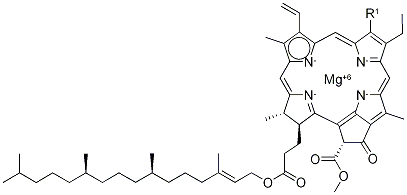
- 1406-65-1
- C54H69MgN4O5R+2
- 878.45446
- All (9)
- China (0)
- (9)
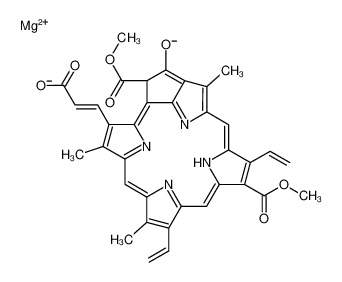
- 111308-93-1
- C36H28MgN4O7
- 652.93512
- All (0)
- China (0)
- (0)
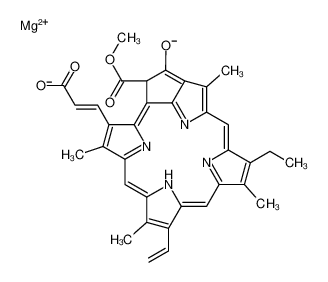
- 18901-56-9
- C35H30MgN4O5
- 610.94100
- All (0)
- China (0)
- (0)
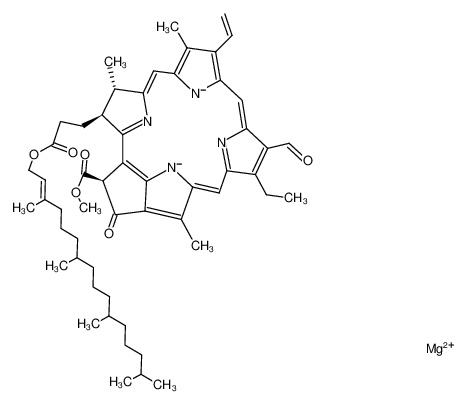
- 22309-14-4
- C55H70MgN4O6
- 907.47200
- All (0)
- China (0)
- (0)
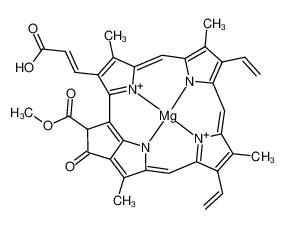
- 27736-03-4
- C35H28MgN4O5
- 608.92600
- All (0)
- China (0)
- (0)
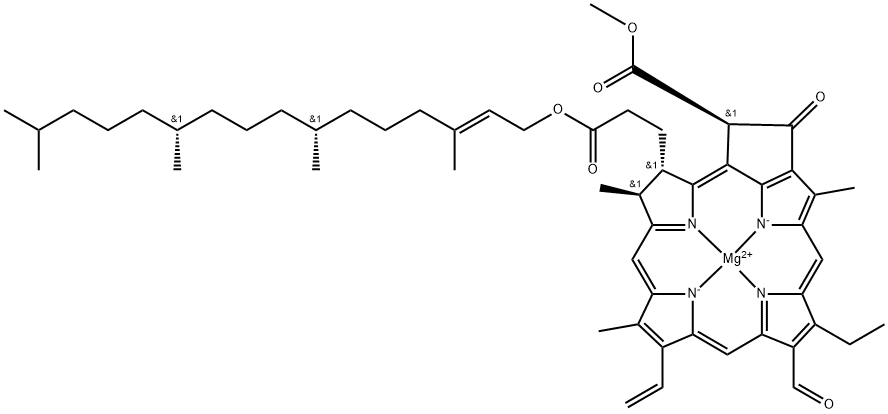
- 519-62-0
- C55H70MgN4O6
- 907.49
- All (0)
- China (0)
- (0)
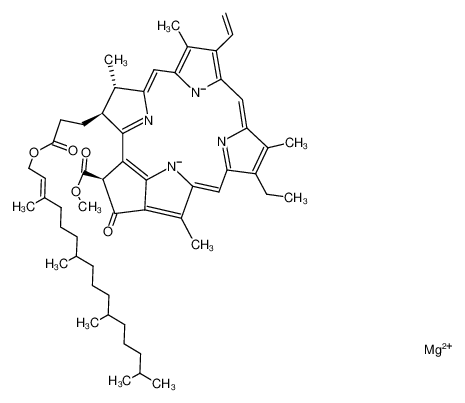
- 22309-13-3
- C55H72MgN4O5
- 893.48900
- All (0)
- China (0)
- (0)
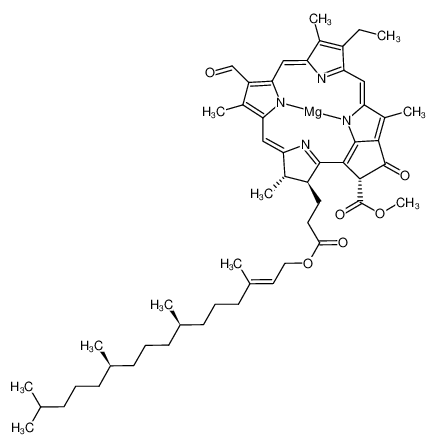
- 519-63-1
- C54H70MgN4O6
- 895.46200
- All (0)
- China (0)
- (0)
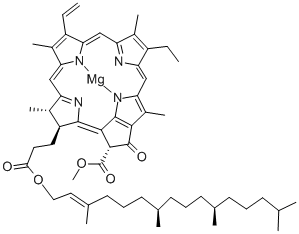
- 479-61-8
- C55H72MgN4O5
- 893.49
- All (8)
- China (6)
- (8)
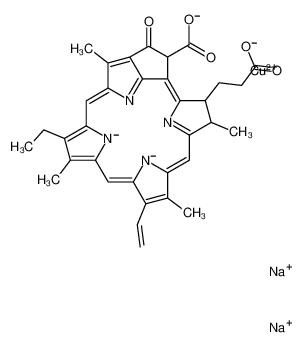
- 26061-35-8
- C34H30CuN4Na2O5
- 684.15100
- All (0)
- China (0)
- (0)
Related Products More >

- CNY Request For Quotation
- CNY Request For Quotation
- CNY Request For Quotation
- 479-61-8
- Request For Quotation
- 25kg/ea
- 479-61-8
- Request For Quotation
- 1Kg
- 479-61-8
- Request For Quotation
- 100g; 1kg; 25g
- 479-61-8
- Request For Quotation
- 1KG
- 479-61-8
- Request For Quotation
- Bottle,barrel,cargo,container,etc.


The overall chemical equation for photosynthesis is 6CO₂ + 6H₂O + light energy → C₆H₁₂O₆ + 6O₂. Let's break it down piece by piece. The reactants, which are the things that go into the process, are carbon dioxide (CO₂) and water (H₂O). Plants take in carbon dioxide from the air through tiny openings in their leaves called stomata, and they absorb water from the soil through their roots.
The sunlight is also super important, but it's not really a traditional "reactant" in the way that CO₂ and H₂O are. Instead, it provides the energy needed to power the whole process. This energy is captured by a pigment called chlorophyll, which is mainly found in the chloroplasts of plant cells. Chlorophyll doesn't get used up in the reaction like a normal reactant; it's more like a helper that enables the reaction to happen. It absorbs different wavelengths of light, especially red and blue light, and uses that energy to split the water molecules.
When the water molecules are split, they release oxygen (O₂) as a by - product. That's why we have so much oxygen in our atmosphere! The hydrogen from the water and the carbon and oxygen from the carbon dioxide are then used to build glucose (C₆H₁₂O₆), which is a type of sugar. Glucose is like the plant's food - it stores energy that the plant can use for growth, reproduction, and other life processes.
So, to sum it all up, the carbon dioxide and water are the starting materials, the sunlight provides the energy that chlorophyll captures, and the end results are glucose for the plant and oxygen for us and other organisms to breathe. It's an amazing process that basically allows life on Earth to exist! If you're still a bit confused, try visualizing it. Picture a plant soaking up sunlight, taking in carbon dioxide, and using all that to create its own food while giving us the oxygen we need. Hope this makes things a lot clearer for you!
The overall equation is:
6CO₂ + 6H₂O + sunlight → C₆H₁₂O₆ (glucose) + 6O₂
Reactants (ingredients):
• Carbon dioxide (CO₂): Plants grab this from the air through tiny leaf pores called stomata.
• Water (H₂O): Absorbed by roots and transported to leaves.
• Sunlight: Provides the energy to power the whole process.
Products (results):
• Glucose (C₆H₁₂O₆): The sugar plants use for energy or store as starch.
• Oxygen (O₂): Released as a byproduct—this is the air we breathe!
Where chlorophyll comes in: It’s not a reactant or product. Think of it as the plant’s solar panel. Chlorophyll (the green pigment in leaves) absorbs sunlight and converts it into chemical energy. Without it, photosynthesis wouldn’t start.
Two key stages:
1. Light-dependent reactions: Sunlight splits water (H₂O) into oxygen (O₂), protons, and energy-carriers (ATP/NADPH). This happens in chloroplasts’ thylakoid membranes.
2. Calvin cycle (light-independent): Uses ATP/NADPH to turn CO₂ into glucose. No sunlight needed here—just the energy from stage 1.
So, the equation sums up the whole process: plants combine CO₂ and H₂O using sunlight (captured by chlorophyll) to make food and oxygen. It’s why plants are the base of the food chain—and why we owe them every breath!
The overall chemical equation for photosynthesis is: 6CO₂ + 6H₂O + light energy → C₆H₁₂O₆ + 6O₂.
Let's start with the reactants. On the left - hand side of the equation, we have carbon dioxide (CO₂) and water (H₂O). Plants take in carbon dioxide from the air through tiny pores in their leaves called stomata. They absorb water from the soil through their roots. And, of course, sunlight is the third crucial reactant. It's not a chemical substance in the traditional sense, but it provides the energy needed to drive the whole process.
Now, how do these reactants come together? Inside the plant's cells, there are special structures called chloroplasts. Chlorophyll, which is a green pigment found in the chloroplasts, plays a really important role, but it's not a reactant. Instead, it acts like a little energy - capturing machine. When sunlight hits the chlorophyll, it gets excited and absorbs the light energy. This energy is then used to split water molecules.
When water (H₂O) is split, it releases oxygen (O₂) as a by - product, which is why plants give off oxygen that we need to breathe. The hydrogen atoms from the water are used in the next steps of the process.
Meanwhile, the carbon dioxide from the air combines with the hydrogen atoms in a series of chemical reactions. These reactions use the energy captured from sunlight to build a complex sugar molecule called glucose (C₆H₁₂O₆). Glucose is like a stored form of energy for the plant. It can be used right away for things like growth and repair, or it can be converted into other molecules like starch for long - term storage.
So, in a nutshell, carbon dioxide and water are the reactants that, with the help of sunlight and chlorophyll, are transformed into glucose and oxygen. Chlorophyll is the key player that makes it all happen by capturing and using the energy from sunlight.