


 Home
Home
As I study biology, I’m confused about why photosynthesis is classified as a chemical reaction. Isn’t it just plants absorbing light? How do chlorophyll and other molecules actually cause a chemical change? I know reactants like carbon dioxide and water are involved, but do they break and form new chemical bonds? Does the light energy absorbed by chlorophyll act as a catalyst to drive these bond changes, creating products like glucose and oxygen? And why is this process considered a chemical reaction rather than a physical one—like how heat changes water to steam? Are there specific indicators, such as the production of new substances with different properties, that distinguish it as chemical? I want to understand the core mechanism: how exactly do the molecular interactions in chloroplasts lead to a reaction that transforms matter and energy?
Why Is Photosynthesis a Chemical Reaction?
Related Encyclopedia
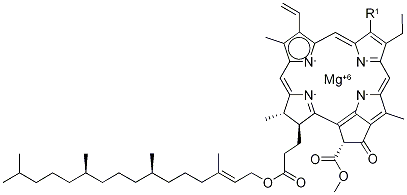
- 1406-65-1
- C54H69MgN4O5R+2
- 878.45446
- All (9)
- China (0)
- (9)
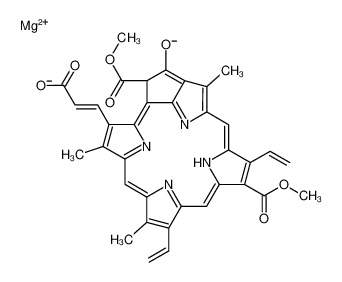
- 111308-93-1
- C36H28MgN4O7
- 652.93512
- All (0)
- China (0)
- (0)
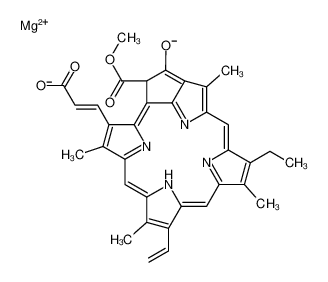
- 18901-56-9
- C35H30MgN4O5
- 610.94100
- All (0)
- China (0)
- (0)
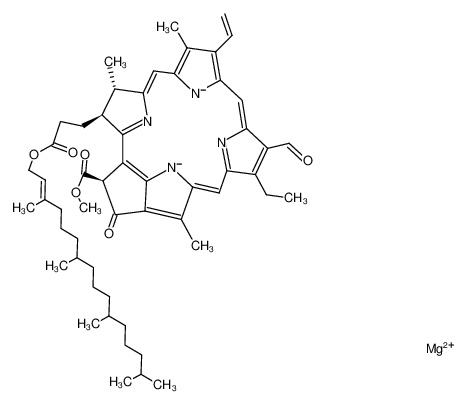
- 22309-14-4
- C55H70MgN4O6
- 907.47200
- All (0)
- China (0)
- (0)
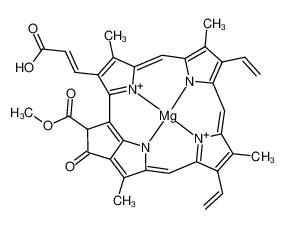
- 27736-03-4
- C35H28MgN4O5
- 608.92600
- All (0)
- China (0)
- (0)
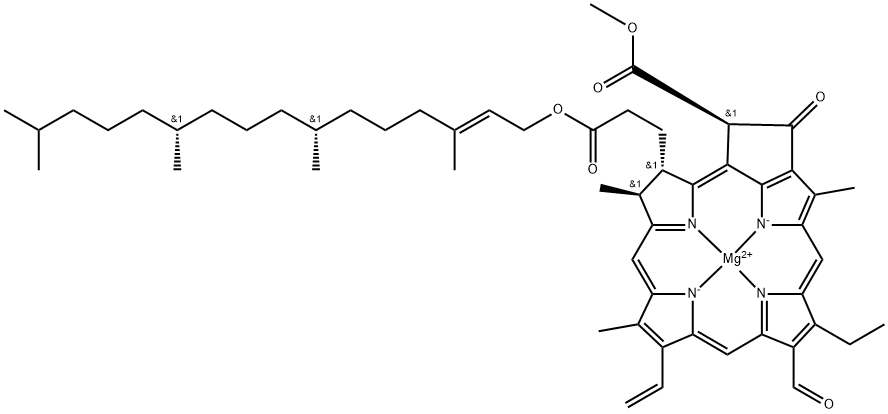
- 519-62-0
- C55H70MgN4O6
- 907.49
- All (0)
- China (0)
- (0)
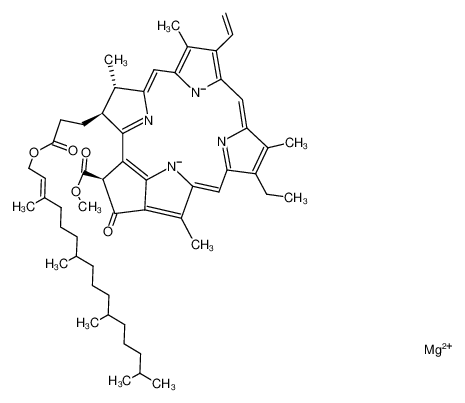
- 22309-13-3
- C55H72MgN4O5
- 893.48900
- All (0)
- China (0)
- (0)
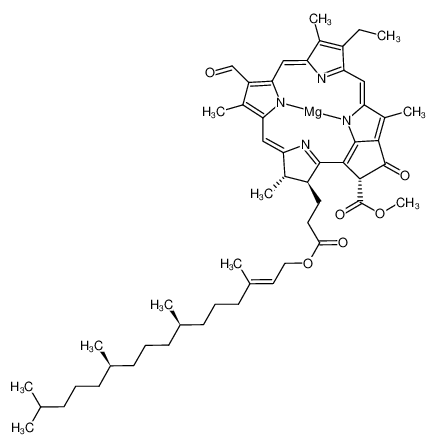
- 519-63-1
- C54H70MgN4O6
- 895.46200
- All (0)
- China (0)
- (0)
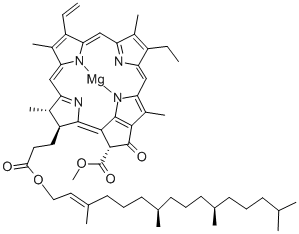
- 479-61-8
- C55H72MgN4O5
- 893.49
- All (8)
- China (6)
- (8)
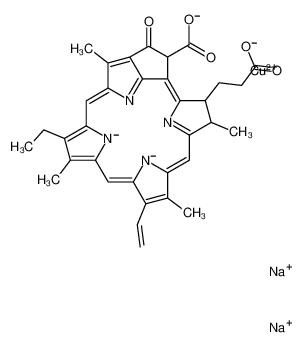
- 26061-35-8
- C34H30CuN4Na2O5
- 684.15100
- All (0)
- China (0)
- (0)
Related Products More >

- CNY Request For Quotation
- CNY Request For Quotation
- CNY Request For Quotation
- 479-61-8
- Request For Quotation
- 25kg/ea
- 479-61-8
- Request For Quotation
- 1Kg
- 479-61-8
- Request For Quotation
- 100g; 1kg; 25g
- 479-61-8
- Request For Quotation
- 1KG
- 479-61-8
- Request For Quotation
- Bottle,barrel,cargo,container,etc.


Start with the basics: what goes into photosynthesis (the reactants) and what comes out (the products). Plants take in carbon dioxide (CO₂) and water (H₂O), and with the help of light energy absorbed by chlorophyll, they churn out glucose (C₆H₁₂O₆) and oxygen (O₂). That right there is a huge red flag for a chemical reaction because the reactants and products have completely different chemical formulas and properties. CO₂ is a gas that we breathe out, water is… well, water, but glucose is a sugar that stores energy, and oxygen is the gas we need to survive. These aren’t just different states of the same substance (like water turning into steam, which is a physical change); they’re全新的 molecules.
Now, let’s talk about what happens at the molecular level, and this is where chlorophyll becomes the star of the show. Chlorophyll molecules in the chloroplasts of plant cells are like tiny solar panels. They absorb light energy, which excites electrons in the chlorophyll to higher energy levels. This energy is used to split water molecules into hydrogen ions (H⁺), electrons, and oxygen. Yep, you heard that right—the O₂ we get is actually a by - product of breaking apart H₂O! That’s a chemical bond breaking: the bonds between hydrogen and oxygen in water are split, which is a clear sign of a chemical reaction.
Then there’s the Calvin cycle (the light - independent reactions), where the magic of bond forming happens. The hydrogen ions and electrons from the water splitting are combined with CO₂ to build glucose. To make glucose, you need to form new bonds between carbon, hydrogen, and oxygen atoms. In CO₂, each carbon is double - bonded to two oxygens, but in glucose, the carbon atoms are bonded to hydrogens and hydroxyl groups (–OH). These are completely new bond arrangements, which means new substances are being created. Catalysts play a role here too—enzymes in the chloroplasts help speed up these reactions, but the key point is that the chemical composition of the molecules is changing.
Let’s compare it to a physical change to make this even clearer. When water boils and becomes steam, the H₂O molecules are still H₂O; they’re just moving faster and farther apart. No new substances are formed. But in photosynthesis, CO₂ and H₂O are literally being rearranged at the atomic level into glucose and O₂. That’s the definition of a chemical reaction: a change in molecular structure.
Another way to think about it is in terms of energy. In photosynthesis, light energy is converted into chemical energy stored in the bonds of glucose. This isn’t just a transfer of energy (like when you heat water); it’s a transformation of energy into a different form stored within new chemical bonds. Physical changes don’t involve this kind of energy storage in new molecules.
So, to sum it all up: photosynthesis is a chemical reaction because it involves the breaking of bonds in CO₂ and H₂O, the forming of new bonds in glucose and O₂, and the creation of substances with entirely different properties. Chlorophyll isn’t just sitting there looking green; it’s acting as a catalyst that captures energy to drive these bond changes. The next time you see a plant, remember it’s not just chilling in the sun—it’s running a mini chemistry lab, turning light and air into sugar and oxygen through some serious molecular reshuffling. That’s why it’s not just a “process”—it’s a full - blown chemical reaction, and a pretty amazing one at that!
Here’s how it works at the atomic level: Light energy excites electrons in chlorophyll, kicking off a chain reaction. These energized electrons travel through proteins in the thylakoid membrane, powering pumps that create a proton gradient (that’s energy storage, like a battery). Meanwhile, water molecules are split—literally ripped apart—into oxygen, protons, and electrons. The oxygen is released as waste (good for us!), while the protons and electrons help convert ADP and NADP⁺ into ATP and NADPH, the cell’s energy carriers.
Then, in the Calvin cycle, ATP and NADPH fuel the assembly of glucose from CO₂. This isn’t just rearranging atoms; it’s building complex molecules from scratch. The key difference from physical changes (like water turning to steam) is that photosynthesis permanently alters the chemical structure of the reactants. Steam is still H₂O, just in gas form—but glucose? That’s a whole new beast with stored energy plants (and we) can use later.
So yes, light acts like a trigger, but the real magic is in the bond-breaking and bond-making that follows. Chlorophyll’s job is to capture and convert energy, but the reaction itself is pure chemistry: atoms swapping partners, electrons changing hands, and new matter emerging. That’s why it’s not just physics—it’s nature’s ultimate alchemy.
Here’s where the chemistry gets real. Water (H₂O) splits into oxygen (O₂), protons (H⁺), and electrons. The oxygen is released as a waste product—the stuff we breathe. The electrons and protons then power a chain of reactions that generate ATP (energy currency) and NADPH (an electron carrier). These molecules act like “energy batteries” for the next stage: the Calvin cycle.
In the Calvin cycle, carbon dioxide (CO₂) from the air gets snagged by an enzyme called RuBisCO. Using the ATP and NADPH from the light reactions, the plant stitches CO₂ molecules together into glucose (C₆H₁₂O₆), a sugar. This involves breaking and forming tons of chemical bonds—CO₂’s carbon-oxygen bonds snap, and new carbon-hydrogen and carbon-carbon bonds form to create glucose. The plant’s basically rewiring atoms into a new molecule with entirely different properties.
So why is this a chemical reaction, not a physical one? Because the reactants (CO₂, H₂O) are transformed into products (glucose, O₂) with different compositions and properties. Physical changes (like water boiling) don’t alter molecular structure—H₂O is still H₂O, whether liquid or gas. But in photosynthesis, you’re rearranging atoms into entirely new substances. It’s like taking Legos apart and building a spaceship instead of a tower.
The light energy isn’t a catalyst—it’s the spark that makes the whole thing happen. Without it, the bonds in water and CO₂ wouldn’t break, and glucose wouldn’t form. That’s why photosynthesis is a chemical reaction: it’s all about atoms swapping partners, driven by the energy from sunlight. Mind blown? Good—that’s biology at its finest.