


 Home
Home
Hi, I'd like to ask—what charge does magnesium typically carry when it forms ions? Why does magnesium lose electrons to become a cation, and how does its position in the periodic table relate to its ionic charge? Are there exceptions to magnesium's usual charge in specific chemical compounds? Thanks!
What Is the Charge of Magnesium Ions and How Is It Determined?
Related Encyclopedia
- 15006-36-7
- C32H36MgN4
- 500.96000
- All (0)
- China (0)
- (0)
- 7439-95-4
- Mg
- 24.31
- All (7)
- China (5)
- (7)
- 917-64-6
- CH3IMg
- 166.24
- All (1)
- China (1)
- (1)
- 12053-95-1
- CuMg2
- 112.15600
- All (0)
- China (0)
- (0)
- 12054-17-0
- Cu2Mg
- 151.39700
- All (0)
- China (0)
- (0)
- 12057-80-6
- Mg9Nd
- 362.98500
- All (0)
- China (0)
- (0)
- 12139-68-3
- CoMg2
- 107.54300
- All (0)
- China (0)
- (0)
- 12142-60-8
- LaMg
- 163.21000
- All (0)
- China (0)
- (0)
- 12159-27-2
- DyMg
- 186.80500
- All (0)
- China (0)
- (0)
- 12159-51-2
- ErMg
- 191.56400
- All (0)
- China (0)
- (0)
Related Products More >

- 14783-68-9
- CNY Request For Quotation
- 14783-68-8
- CNY Request For Quotation
- 14783-68-7
- CNY Request For Quotation
- 869-06-9
- CNY Request For Quotation
- 869-06-8
- CNY Request For Quotation
- 869-06-7
- CNY Request For Quotation
- 3344-18-3
- CNY Request For Quotation
- 3344-18-2
- CNY Request For Quotation


Magnesium’s position in the periodic table, specifically in Group 2 (alkaline earth metals), dictates its ionic charge. Group 2 elements all have two valence electrons, leading them to form 2+ cations when they lose these electrons. The periodic table’s structure groups elements by their valence electron count, so Group 2 elements share this tendency to lose two electrons for stability.
In most chemical compounds, magnesium consistently forms a 2+ ion, as seen in compounds like magnesium oxide (MgO) and magnesium chloride (MgCl₂). However, rare exceptions exist in certain specialized compounds or under extreme conditions. For example, in some organometallic compounds or high-pressure environments, magnesium might exhibit different bonding behaviors, though these cases are uncommon and typically involve complex chemical environments. Overall, the 2+ charge remains the standard for magnesium ions in most natural and synthetic compounds.
In the vertical sequence of the periodic table, Group 2 elements consistently exhibit +2 oxidation states due to their identical valence electron configurations. Moving down the group from beryllium to radium, while atomic radius increases and ionization energies gradually decrease, all members maintain this two-electron loss pattern. This periodic trend stems from their uniform s² valence structure, leading to pronounced chemical similarities within the group. Magnesium's intermediate atomic size between beryllium and calcium results in an ionic radius that balances strong ionic bonding capabilities with moderate polarizability.
Although +2 is the predominant oxidation state, exceptional cases exist under extreme conditions. Certain specialized organometallic compounds or high-pressure synthesized materials may temporarily stabilize magnesium in a +1 oxidation state. For instance, some ligand-coordinated organic magnesium complexes demonstrate partial charge delocalization through π-back donation mechanisms. Additionally, high-temperature molten salt systems or plasma environments might induce non-typical electron excitations, though these states remain unstable under normal conditions. Laboratory studies have reported magnesium complexes with apparent sub +2 oxidation states, but these systems require carefully engineered ligand fields and exhibit negligible thermal stability.
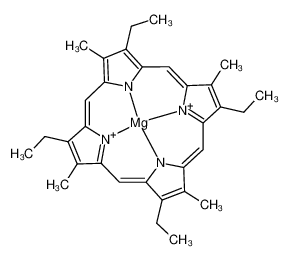
The stable +2 oxidation state enables magnesium to participate extensively in geological processes, forming major constituents of silicate and carbonate minerals. In biological systems, the magnesium ion serves as the central coordinator for chlorophyll's porphyrin ring, where its specific coordination geometry is essential for light absorption during photosynthesis. Industrial applications leverage magnesium compounds such as magnesium oxide and magnesium chloride for their high melting points and hygroscopic properties, utilizing them as refractory materials and desiccants respectively. All these functional properties rely fundamentally on magnesium's consistent formation of divalent cations, as deviations from this oxidation state would drastically alter its chemical interactions and material characteristics.
Magnesium has an atomic number of 12, meaning its neutral atom contains 12 protons and 12 electrons. The electron configuration of magnesium is 1s² 2s² 2p⁶ 3s². The outermost energy level, the third shell, holds two valence electrons in the 3s orbital. In chemical reactions, atoms strive to attain a stable electron configuration, often mimicking that of the nearest noble gas. For magnesium, the closest noble gas is neon, which has a full outer shell with eight electrons. To achieve this stability, magnesium loses its two valence electrons. By doing so, it reduces its electron count to 10, matching neon’s configuration, and forms a cation with a 2+ charge. The loss of electrons makes the number of protons (12) exceed the number of electrons (10), resulting in the net positive charge.
Magnesium’s position in the periodic table further explains its ionic charge. It resides in Group 2, also known as the alkaline earth metals. Elements in this group share a common electron configuration: each has two valence electrons in their outermost s orbital. As a result, all Group 2 elements tend to lose these two electrons to form 2+ cations, following the same stability-seeking principle as magnesium. The periodic table’s structure thus predicts the ionic charges of elements in Group 2, as their valence electron count directly correlates with their propensity to lose electrons and form specific cations.
While magnesium predominantly forms the Mg²⁺ ion, are there exceptions to this usual charge in specific chemical compounds? Under most circumstances, magnesium adheres to its 2+ charge, as the energy required to remove additional electrons is significantly higher. The first ionization energy (the energy needed to remove the first valence electron) for magnesium is relatively low, making it easy to lose the first electron. The second ionization energy is higher but still feasible, leading to the 2+ ion. However, the third ionization energy is drastically higher, as it involves removing an electron from a full inner shell, which is energetically unfavorable. This large energy gap prevents magnesium from forming ions with higher charges, such as 3+.
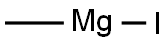
In some specialized chemical contexts, magnesium can exhibit different bonding characteristics, but these do not typically result in a change to its ionic charge. For example, in certain organometallic compounds, magnesium may form covalent bonds with carbon, as seen in Grignard reagents (RMgX, where R is an organic group and X is a halogen). In these compounds, magnesium is still considered to have a +2 oxidation state, even though the bonding has covalent character. The electronegativity difference between magnesium and carbon is not large enough to cause complete electron transfer, but the magnesium atom still effectively loses electron density to the more electronegative atoms, maintaining its typical oxidation state.
Another area to consider is magnesium’s role in complex ions or coordination compounds. Here, magnesium can act as a central metal ion, coordinating with ligands (atoms, ions, or molecules that donate electron pairs). However, the charge of the magnesium ion in these complexes remains 2+. The ligands form coordinate covalent bonds with the magnesium cation, but the ion’s fundamental charge does not change. For instance, in the magnesium ion’s coordination with water molecules to form hydrated ions like [Mg(H₂O)₆]²⁺, the magnesium ion retains its 2+ charge, with the water molecules simply surrounding it and donating electron pairs to stabilize the complex.