


 Home
Home
Hi, I'd like to ask—what is the electronic configuration of scandium? How are the electrons of scandium distributed in its atomic orbitals? What role does scandium's electronic configuration play in determining its chemical properties? Are there any exceptional cases or special factors in scandium's electron configuration? Thanks!
What Is the Electronic Configuration of Scandium? Details of Scandium's Electron Arrangement
Related Encyclopedia
- 7440-20-2
- Sc
- 44.96
- All (5)
- China (1)
- (5)

- 14017-33-5
- FSc
- 63.95430
- All (0)
- China (0)
- (0)

- 25764-12-9
- HNSc
- 59.97060
- All (0)
- China (0)
- (0)

- 12059-91-5
- OSc
- 60.95530
- All (0)
- China (0)
- (0)

- 12007-34-0
- B2H4Sc
- 70.60970
- All (0)
- China (0)
- (0)
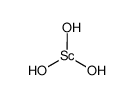
- 17674-34-9
- H3O3Sc
- 95.97790
- All (0)
- China (0)
- (0)
- 12019-20-4
- CuSc
- 108.50200
- All (0)
- China (0)
- (0)
- 12030-53-4
- IrSc
- 237.17300
- All (0)
- China (0)
- (0)
- 12030-15-8
- InSc3
- 249.68600
- All (0)
- China (0)
- (0)
- 12038-68-5
- Re2Sc
- 417.37000
- All (0)
- China (0)
- (0)
Related Products More >

- 7440-20-2
- Request For Quotation
- 7440-20-2
- Request For Quotation
- 25 kg/bag
- 7440-20-2
- Request For Quotation
- 7440-20-2
- Request For Quotation
- 7440-20-2
- Request For Quotation
- 25kg
- 43238-07-9
- Request For Quotation
- 1KG/BAG
- 3804-23-7
- Request For Quotation
- 3804-23-7
- Request For Quotation


As a transition metal, scandium’s chemical properties arise from its valence electrons: two in 4s and one in 3d. It commonly exhibits a +3 oxidation state, losing all three valence electrons to form Sc³⁺, which has a stable noble gas configuration (like argon). This drives its reactivity—for example, forming Sc₂O₃ with oxygen or ScCl₃ with chlorine, where electronegative atoms attract and remove its valence electrons.
Unlike exceptions like chromium or copper (which have halffilled/full dsubshells for stability), scandium follows typical filling rules without deviations. The energy difference between 4s and 3d orbitals in scandium allows straightforward filling, making its configuration a simple case for understanding transition metal electron arrangements and predictable reactivity.
Electrons within an atom occupy orbitals based on the Aufbau principle, which dictates that they fill orbitals in the order of increasing energy. The 1s orbital, being the lowest in energy among all atomic orbitals, can hold a maximum of two electrons. The notation 1s² in scandium's configuration indicates that the 1s orbital is completely filled with two electrons. As we move to the second electron shell, there are two subshells: the 2s and 2p. The 2s subshell, similar to the 1s, can accommodate two electrons, represented as 2s². The 2p subshell, with its three orbitals, has a capacity for six electrons, shown as 2p⁶. Together, these fill the second shell completely.
Proceeding to the third shell, the 3s and 3p orbitals are filled next. The 3s orbital holds two electrons (3s²), and the 3p orbital holds six (3p⁶), accounting for a total of 18 electrons so far. When it comes to the fourth shell, the 4s orbital has a slightly lower energy than the 3d orbitals during the electron filling process. As a result, two electrons enter the 4s orbital (4s²) before any electrons occupy the 3d orbitals. Finally, the 21st electron of scandium finds its place in the 3d orbital, resulting in 3d¹.
Scandium's electronic configuration has a profound impact on its chemical properties. As a member of the transition metal group, the electrons in its 3d and 4s orbitals are crucial in chemical reactions. Scandium commonly loses three outer electrons the two 4s electrons and the single 3d electron to form a Sc³⁺ ion. By losing these electrons, scandium attains a stable electron configuration that resembles that of the noble gas argon. This stable configuration significantly reduces the reactivity of the Sc³⁺ ion compared to the neutral scandium atom. In chemical bonding, the ability to form the +3 ion enables scandium to engage in ionic bonding with nonmetals. For instance, when scandium reacts with oxygen, it forms scandium(III) oxide (Sc₂O₃). In this reaction, oxygen atoms, which have a strong tendency to gain electrons to achieve a stable octet configuration, accept electrons from scandium atoms.
Regarding exceptional cases or special factors in scandium's electron configuration, it generally adheres to the standard electron filling rules without significant deviations. In the realm of transition metals, some heavier elements exhibit electron configurations that deviate from the Aufbau principle. These deviations occur in an attempt to achieve more stable arrangements, such as half filled or fully filled d subshells. However, scandium does not show such behavior. With just one electron in the 3d orbital and two in the 4s orbital, its electronic configuration is relatively simple. This simplicity leads to more predictable chemical behavior compared to many other transition metals. The limited number of d electrons means that there are fewer complex d orbital interactions, contributing to the consistent formation of the +3 oxidation state in most of its compounds. This predictability makes scandium a valuable element in various applications where the stability of its +3 ion allows it to form reliable compounds with other elements, whether in materials science, catalysis, or other fields where specific chemical properties are required.
What's notable is the filling of the 4s and 3d orbitals. Although the 3d orbitals belong to the third energy level, the 4s orbital has slightly lower energy initially, so it fills before the 3d orbital. This is why scandium has 2 electrons in the 4s orbital and 1 electron in the 3d orbital. These 3 electrons, 2 from 4s and 1 from 3d, are the valence electrons of scandium and play a crucial role in determining its chemical properties.
Scandium's electronic configuration is key to its chemical behavior. As a transition metal, it commonly forms compounds with a +3 oxidation state. By losing its two 4s electrons and the single 3d electron, scandium achieves a stable electron configuration similar to that of argon, the noble gas preceding it in the periodic table. This tendency to lose electrons makes scandium reactive. For example, in the presence of oxygen, it readily forms scandium(III) oxide, Sc₂O₃. In this reaction, the three valence electrons are transferred to oxygen atoms, which have a greater electronegativity and thus attract these electrons.
In terms of exceptional cases, scandium's electron configuration follows the Aufbau principle quite consistently. Unlike some other transition metals such as chromium (with an electron configuration of 3d⁵ 4s¹ instead of the expected 3d⁴ 4s²) or copper (3d¹⁰ 4s¹ instead of 3d⁹ 4s²) that have irregular configurations to achieve halffilled or fullyfilled d orbitals for extra stability, scandium doesn't show such deviations. Its straightforward electron configuration makes its chemical properties relatively predictable compared to these more exceptional transition metals. This allows chemists to anticipate how scandium will interact with other elements based on the number and distribution of its valence electrons in the 4s and 3d orbitals.