


 Home
Home
Hi, I'd like to ask—is sodium polyacrylate naturally sticky? When it absorbs water and becomes a hydrogel, does its stickiness change compared to when it's dry? If the dry sodium polyacrylate is exposed to humid air, will it become sticky? Does the degree of dryness affect how sticky it is? Thanks!
Is Sodium Polyacrylate Sticky in Nature, and Does Its Stickiness Relate to the Material's Dryness?
Related Encyclopedia
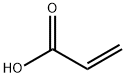
- 9003-04-7
- C3H4O2
- 72.06
- All (33)
- China (26)
- (33)

- 51252-84-7
- C3H4O2
- 72.06270
- All (0)
- China (0)
- (0)
- 25191-16-6
- C6H12O6
- 180.15600
- All (0)
- China (0)
- (0)
- 27015-21-0
- C15H14O7
- 306.26700
- All (0)
- China (0)
- (0)
- 125720-21-0
- C47H74N16O10
- 1023.19
- All (0)
- China (0)
- (0)
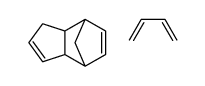
- 49603-39-6
- C14H18
- 186.29300
- All (0)
- China (0)
- (0)
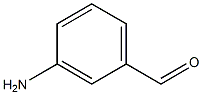
- 29159-23-7
- C7H7NO
- 121.13658
- All (0)
- China (0)
- (0)
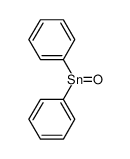
- 31671-16-6
- C12H10OSn
- 288.92000
- All (0)
- China (0)
- (0)

- 12260-12-7
- F3H2-
- 59.01110
- All (0)
- China (0)
- (0)
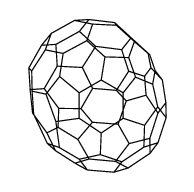
- 145954-03-6
- C78
- 936.83500
- All (0)
- China (0)
- (0)
Related Products More >

- 9003-55-8
- CNY Request For Quotation
- 7446-19-7
- USD 10.0000
- 25kg
- 75-13-8
- CNY 180000.0000
- 1ton
- 24981-13-3
- Request For Quotation
- 25kg


When it absorbs water and forms a hydrogel, its stickiness changes. The hydrogel becomes slippery or slightly gelatinous rather than sticky. Water molecules absorbed into the polymer network act as a lubricant, reducing any potential for adhesion and giving it a viscous, gel-like texture that does not easily stick to surfaces.
If dry sodium polyacrylate is exposed to humid air, it can take in small amounts of moisture. This partial hydration may cause particles to clump and lead to a slight increase in stickiness compared to its fully dry state, though this stickiness is minimal and not like that of purpose-made adhesives.
The degree of dryness affects its stickiness directly. In a fully dry state, it stays non-sticky and flows freely. As moisture increases—from humid air or partial water absorption—particles start to stick to each other and sometimes surfaces, creating a slight sticky feel. More moisture makes this effect more noticeable, but it never becomes highly sticky and turns into a hydrogel once fully hydrated.
When it soaks up water and turns into that gel, things change. The hydrogel feels soft, and there’s a slight stick, but not much. It’s more like a weak cling, nothing like tape or glue.
Humid air makes a difference too. Leave the dry powder out on a damp day, and it starts to pick up moisture. Then it gets a little sticky, kind of clumpy. The drier it stays, the less sticky. Even a little moisture, though, brings out that slight tack. It’s cool how water affects it so much, changing from powdery to slightly sticky based on how much it absorbs.
Upon water absorption, the polymer undergoes a dramatic transformation, swelling to many times its original volume through osmotic processes. The resulting hydrogel network demonstrates increased viscoelasticity, with the degree of stickiness correlating directly with hydration level. Cross-linking density plays a critical role here - lightly cross-linked gels exhibit greater chain mobility, leading to more pronounced surface tackiness when hydrated. This property is particularly evident in consumer products like "instant snow" where manufacturers carefully control cross-linking to achieve desired tactile characteristics.
Exposure to humid environments triggers gradual moisture absorption even in dry sodium polyacrylate. Relative humidity levels above 60% can initiate surface swelling, creating localized regions of increased adhesion. This phenomenon becomes problematic in storage situations where moisture ingress leads to product clumping. Industrial packaging solutions often incorporate desiccants or moisture barriers to maintain product flow properties during transportation and warehousing.
The relationship between dryness and stickiness follows a predictable pattern in laboratory experiments. Completely dehydrated samples show no measurable adhesion when tested with standard tack measurement devices. As hydration progresses, the polymer's surface energy increases exponentially, reaching maximum tackiness at approximately 80% of its maximum absorption capacity. Beyond this point, the gel structure becomes saturated, and surface stickiness actually decreases due to the formation of a more rigid hydration shell.
These properties find important applications in materials science education, where students can explore concepts like polymer swelling, osmotic pressure, and hydrogel mechanics through simple experiments with sodium polyacrylate. The material's predictable response to moisture changes makes it an excellent teaching tool for demonstrating equilibrium processes in superabsorbent polymers.
When sodium polyacrylate absorbs water, it undergoes a dramatic physical transformation, swelling into a translucent hydrogel. The degree of stickiness in this hydrated state depends largely on the saturation level. A fully saturated hydrogel typically feels cool, moist, and smooth to the touch, with minimal tackiness due to the water molecules forming a lubricating layer between polymer chains. However, if the gel is only partially hydrated—such as when it has absorbed some but not all available water—the surface may exhibit a slightly sticky or clammy feel. This occurs because uneven water distribution leaves some polymer regions exposed, allowing them to adhere lightly to skin or other materials.
Exposure to humid air can also affect sodium polyacrylate's texture. In low-humidity environments, dry sodium polyacrylate remains non-sticky, as moisture absorption is minimal. However, in high-humidity conditions, the polymer begins absorbing atmospheric moisture even without direct water contact. This gradual hydration can lead to a slightly tacky surface, particularly if the exposure is prolonged. The stickiness in this case is temporary and reversible; once the excess moisture evaporates, the polymer returns to its original dry, non-sticky state.
The degree of dryness plays a critical role in determining stickiness. Completely dry sodium polyacrylate is non-adhesive, while partially dried hydrogels (those that have released some absorbed water) may regain slight tackiness as the remaining water redistributes unevenly. This property is particularly relevant in applications where moisture control is essential, such as in medical dressings or packaging materials, where inconsistent hydration could lead to unwanted adhesion.
Interestingly, the stickiness of hydrated sodium polyacrylate can also be influenced by temperature. Warmer conditions accelerate water absorption and may temporarily increase tackiness due to faster polymer chain expansion, while cooler environments slow absorption and reduce surface adhesion. This temperature-dependent behavior makes sodium polyacrylate versatile for applications requiring controlled moisture release, such as in slow-release agricultural gels.
Understanding these moisture-related properties is crucial for optimizing sodium polyacrylate's performance in various industries. Whether used for rapid water absorption in diapers or sustained moisture retention in soil conditioners, the polymer's behavior under different humidity and hydration levels directly impacts its practical applications. Manufacturers often adjust particle size and cross-linking density to fine-tune these properties, ensuring the material meets specific performance requirements without unwanted stickiness.