


 Home
Home
Hi, I'd like to ask—what exactly is unrefined coconut oil? How is its production process different from that of refined coconut oil? What natural nutrients and active ingredients does it retain? Does it have unique textures or smells compared to refined ones? Can these characteristics affect its usage scenarios? Thanks!
What is unrefined coconut oil and what are its main components and characteristics?
Related Encyclopedia
- 8001-31-8
- N/A
- 0
- All (37)
- China (5)
- (37)
- 61788-47-4
- C19H21NO5
- 0
- All (8)
- China (0)
- (8)
- 55621-34-6
- C32H62O7
- 558.83000
- All (84)
- China (21)
- (84)

- 143-07-7
- C12H24O2
- 200.32
- All (84)
- China (21)
- (84)
- 67629-40-7
- C30H49ClO3
- 493.16100
- All (38)
- China (12)
- (38)

- 59-02-9
- C29H50O2
- 430.71
- All (38)
- China (12)
- (38)

- 79434-83-6
- C29H50O2
- 430.70600
- All (38)
- China (12)
- (38)

- 2074-53-5
- C29H50O2
- 430.71
- All (38)
- China (12)
- (38)
- 142386-74-1
- C38H67N2O3P
- 630.92400
- All (38)
- China (12)
- (38)
- 142-54-1
- C15H31NO2
- 257.41200
- All (0)
- China (0)
- (0)
Related Products More >

- CNY Request For Quotation
- CNY Request For Quotation
- CNY Request For Quotation
- 2074-53-5
- CNY 30.0000
- 25kg
- 30999-06-5
- Request For Quotation
- 50kg
- 30999-06-5
- Request For Quotation
- 1kg
- 9002-96-4
- Request For Quotation
- 9002-96-4
- Request For Quotation


Refined coconut oil, by contrast, typically uses copra dried with high heat or even bleached. It is often extracted using solvents like hexane, followed by bleaching to remove color and deodorization with high heat to eliminate odors. These steps strip away many natural compounds, resulting in a more neutral product.
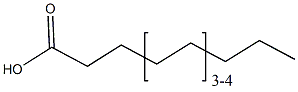
Unrefined coconut oil retains more natural nutrients and active ingredients, including lauric acid, vitamin E, phenolic compounds, and small amounts of minerals. These components, such as lauric acid with its antimicrobial properties, contribute to its potential benefits.
Compared to refined versions, unrefined coconut oil has distinct traits. It has a rich, creamy texture when solid and a clear, thin consistency when melted, along with a strong, sweet, coconut-like aroma and flavor. Refined oil, on the other hand, is usually odorless, tasteless, and has a smoother texture.
These differences affect usage. Unrefined oil is preferred in raw applications like smoothies, salad dressings, or natural skincare, where its flavor and nutrients are valued. Refined oil works better in high-heat cooking or recipes where a neutral taste is needed, as its higher smoke point and lack of flavor make it more versatile in such scenarios.
The manufacturing process for unrefined coconut oil typically begins with fresh coconut meat rather than dried copra. There are two primary methods: the dry process and the wet process. In the dry method, fresh coconut meat is quickly dried at low temperatures, usually below 120°F (49°C), to prevent nutrient degradation. This dried meat, called copra, is then cold-pressed to extract the oil without using chemical solvents. The wet process involves extracting coconut milk from fresh coconuts and separating the oil through natural methods like fermentation, centrifugation, or enzymatic treatment. Both approaches emphasize preserving the oil's natural compounds by avoiding high heat and chemical treatments.
This gentle processing preserves an array of beneficial nutrients that would otherwise be lost during refining. Unrefined coconut oil maintains its complete profile of medium-chain triglycerides (MCTs), with lauric acid remaining particularly prominent. It also retains natural vitamin E, polyphenolic compounds, and phytosterols, all of which contribute to its antioxidant properties. These preserved nutrients differentiate unrefined coconut oil from its refined counterpart, which typically undergoes processes that strip away many of these beneficial components.
Sensory characteristics provide another clear distinction between unrefined and refined coconut oils. Unrefined varieties exhibit a strong, natural coconut aroma and flavor profile. The scent is typically fresh and mildly sweet with distinct coconut notes, while the taste carries similar tropical characteristics. This pronounced flavor and fragrance result directly from the oil's natural components remaining intact after processing. Texturally, unrefined coconut oil often appears slightly cloudy due to the presence of natural particles and may feel softer at room temperature compared to more processed versions.
These inherent qualities significantly influence the oil's applications. In cooking, unrefined coconut oil's robust flavor makes it particularly suitable for dishes where coconut taste enhances the recipe, such as tropical desserts, curries, and certain baked goods. The oil's natural nutrients also appeal to health-conscious consumers in raw food preparations. For cosmetic uses, the preserved antioxidants and vitamins benefit skin and hair care routines, though the strong scent may not be desirable for unscented products. The oil's softer consistency at room temperature affects its spreadability and absorption rate, creating different user experiences compared to refined coconut oil. These factors collectively determine its optimal usage scenarios across culinary and personal care applications.
In contrast, refined coconut oil undergoes several processing steps including bleaching, deodorizing, and sometimes hydrogenation. The starting material is typically dried coconut meat (copra), which requires more aggressive processing to remove impurities and neutralize odors. This refining process eliminates many of the natural compounds that give unrefined oil its distinctive properties.
From a chemical perspective, unrefined coconut oil maintains higher concentrations of bioactive components. It typically contains 5-10% more polyphenols than refined varieties, along with greater amounts of vitamin E and other antioxidants. The fatty acid profile remains similar between both types, with lauric acid (C12:0) comprising approximately 45-50% of total fatty acids, but the unrefined version shows better preservation of these nutrients due to minimal processing.
The physical characteristics of unrefined coconut oil are immediately noticeable. It maintains a translucent, golden hue and exhibits a viscosity that's slightly higher than its refined counterpart at room temperature. The melting point range (24-26°C) remains consistent, but the crystallization pattern differs due to preserved minor components.
These differences significantly affect application scenarios. Unrefined coconut oil's pronounced flavor and aroma make it unsuitable for high-heat cooking where these characteristics would degrade, but ideal for low-temperature applications like salad dressings or direct consumption. In cosmetic formulations, the preserved phytochemicals provide additional skin-beneficial properties, though the stronger scent may require adjustment in fragrance-sensitive products. The higher cost associated with cold-pressing methods also influences its market positioning compared to refined alternatives.
Refined versions are different. They use dried coconut meat, maybe, and process it more—bleaching to take out color, deodorizing to remove smells. That probably strips away some of the natural stuff.
Unrefined has that strong coconut smell and taste, which I notice right away. It’s solid when cool but melts easy. I’ve read it keeps things like vitamin E and some plant compounds. Refined is milder, maybe no scent, smoother.
These differences matter for how you use them. Unrefined is good in recipes where you want coconut flavor, or on skin/hair for the natural bits. Refined works when you don’t want the taste, like in baking or lotions where scent isn’t needed.