


 Home
Home
Hi, I'd like to ask—Can coconut oil prevent color-treated hair from becoming dry and brittle? How do its components such as oleic acid and palmitic acid nourish hair strands without fading color? Will frequent use affect semi-permanent or permanent hair dye? How long should it be left on before washing? Thanks!
Is coconut oil good for color-treated hair, and how do its components like linoleic acid affect hair color retention and texture?
Related Encyclopedia
- 8001-31-8
- N/A
- 0
- All (37)
- China (5)
- (37)
- 61788-47-4
- C19H21NO5
- 0
- All (8)
- China (0)
- (8)
- 5027-60-1
- C18H32O2
- 280.44500
- All (25)
- China (7)
- (25)

- 60-33-3
- C18H32O2
- 280.45
- All (25)
- China (7)
- (25)
- 4906-90-5
- C18H32O2
- 280.44500
- All (25)
- China (7)
- (25)

- 112-80-1
- C18H34O2
- 282.46
- All (141)
- China (22)
- (141)
- 141903-93-7
- C17H35N
- 253.46600
- All (141)
- China (22)
- (141)

- 60605-23-4
- C16H32O2
- 256.42400
- All (57)
- China (10)
- (57)

- 66321-94-6
- C16H32O2
- 256.42400
- All (57)
- China (10)
- (57)

- 57-10-3
- C16H32O2
- 256.42
- All (57)
- China (10)
- (57)
Related Products More >

- 60-33-3
- USD 30.0000
- 25kg
- 93-83-4
- Request For Quotation
- 25kg/drum
- 93-83-4
- Request For Quotation
- Bottle,barrel,cargo,container,etc.
- 93-83-4
- Request For Quotation
- 93-83-4
- Request For Quotation
- 9002-92-0
- Request For Quotation
- 9002-92-0
- Request For Quotation
- 9002-92-0
- Request For Quotation


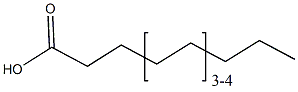
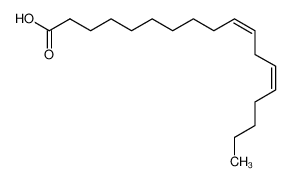
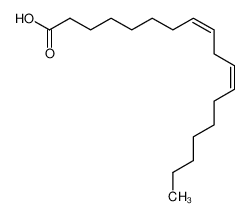
Oleic acid and palmitic acid are part of what makes it nourishing. Oleic acid, an unsaturated fatty acid, gets through the hair cuticle to moisturize from the inside. Palmitic acid, a saturated fatty acid, forms a protective layer on the surface. Neither has harsh chemicals that break down dye molecules. Instead, they strengthen the hair, which can help hold onto color by reducing cuticle damage that lets dye leak out.
Using it often is more likely to affect semi-permanent dye than permanent. Semi-permanent dye sits on the hair’s surface, so over time, the oil’s conditioning might gently lift some color, causing slight fading. Permanent dye, which goes into the hair cortex, is harder to affect, but using too much could still lead to tiny amounts of fading if the oil loosens small bits of dye in the cuticle.
Leaving coconut oil on for 30 minutes to 2 hours is usually enough. Some leave it overnight for deeper conditioning, but longer times don’t add much benefit and might cause buildup. It’s best to use a moderate amount, focusing on mid-lengths to ends, then rinse well with a mild shampoo to avoid residue.
From a chemical perspective, oleic acid's ability to align along the hair cuticle creates a barrier that reduces moisture loss while being chemically inert enough to avoid interacting with oxidative hair dyes. Palmitic acid contributes to the oil's melting point, ensuring it remains semi-solid at room temperature and doesn't drip excessively during application. This physical property is particularly important for maintaining even distribution on the hair shaft.
Regarding colorfastness, studies show that coconut oil doesn't significantly interfere with semi-permanent dyes, which primarily coat the hair surface. However, with permanent dyes that penetrate the cortex, excessive oil application may create a temporary barrier affecting dye absorption during initial processing. The key factor is application timing—using coconut oil as a pre-wash treatment rather than immediately before dye application minimizes this risk.
For optimal results, leaving coconut oil on for 30-60 minutes before shampooing provides sufficient penetration without causing buildup. The exact duration depends on hair porosity; low-porosity hair benefits from shorter times while highly porous hair may require slightly longer. Overuse, defined as more than twice weekly, can lead to product accumulation that requires stronger clarifying agents to remove, potentially stripping color molecules. Temperature control during application also matters—warm (not hot) oil enhances penetration through temporary expansion of the hair cuticle.
Oleic acid and palmitic acid in it probably help. Oleic acid has a small molecular size, so it can get into the hair cuticle to nourish from inside. Palmitic acid, being a saturated fatty acid, likely forms a protective layer on the surface, locking in moisture without washing away color pigments.
Using it often is mostly okay, but semi-permanent dyes might fade a bit faster. They sit closer to the surface, so the oil could gently lift some color. Permanent dyes, which bond deeper in the hair cortex, aren’t as affected. Leaving it on 30 minutes to an hour works; overnight is fine too, but you might need extra rinsing to get rid of leftover oil.
The nourishing effects of coconut oil come primarily from its fatty acid profile, particularly lauric acid, oleic acid, and palmitic acid. Lauric acid, with its small molecular size, penetrates the hair shaft effectively, strengthening the cortex from within. Oleic acid, a monounsaturated fatty acid, complements this by smoothing the hair cuticle, reducing frizz, and enhancing shine without stripping color molecules from the hair. Palmitic acid, a saturated fatty acid with a larger molecular structure, coats the outer hair shaft, providing additional protection against moisture loss and environmental damage. This combination of penetration and surface protection helps maintain hair strength and elasticity while minimizing color fade.
When it comes to semi-permanent versus permanent hair dye, coconut oil's impact varies. Semi-permanent dyes, which primarily coat the hair shaft without penetrating deeply, are less likely to be affected by coconut oil's use. The oil may even help maintain the dye's vibrancy by keeping the hair cuticle smooth and reducing fading from environmental exposure. Permanent dyes, which chemically alter the hair's structure by penetrating the cortex, might see slightly different effects. While coconut oil won't strip permanent color, excessive or improper use could potentially interfere with the dye's longevity if it disrupts the chemical bonds formed during the coloring process. However, when used moderately as part of a hair care routine, coconut oil is unlikely to cause significant color loss.
The optimal duration for leaving coconut oil on color-treated hair depends on the desired effect and hair type. For a deep conditioning treatment, leaving the oil on for at least 30 minutes to an hour is recommended, allowing sufficient time for the fatty acids to penetrate and nourish the hair shaft. For more intensive hydration, some users opt to leave the oil on overnight, wrapping their hair in a shower cap to prevent staining of bedding. Regardless of duration, it's important to thoroughly shampoo and condition afterward to remove excess oil, as buildup can weigh down hair and make it appear greasy. The key is to use coconut oil in moderation, adjusting frequency based on individual hair needs and color treatment type.