


 Home
Home
In a Chennai chemistry class, a student scribbles O₂ and F₂ on a notebook, wondering, “Why are they gases? Do they form salt-like NaCl?” The teacher notices and fires back—Is oxygen and fluorine an ionic compound?
Is Oxygen and Fluorine an Ionic Compound? Where is OF₂ Used?
Related Encyclopedia
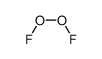
- 7783-44-0
- F2O2
- 69.99560
- All (0)
- China (0)
- (0)
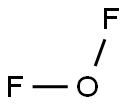
- 7783-41-7
- F2O
- 54
- All (0)
- China (0)
- (0)
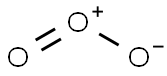
- 10028-15-6
- O3
- 47.9982
- All (5)
- China (1)
- (5)

- 119623-14-2
- O3
- 52.99750
- All (5)
- China (1)
- (5)
- 167874-66-0
- O3
- 51.99740
- All (5)
- China (1)
- (5)
- 167874-65-9
- O3
- 49.99770
- All (5)
- China (1)
- (5)
- 26057-96-5
- O3
- 49.99800
- All (5)
- China (1)
- (5)
- 21424-30-6
- O3
- 52.99750
- All (5)
- China (1)
- (5)
- 21424-25-9
- O3
- 50.99740
- All (5)
- China (1)
- (5)

- 14333-26-7
- DF
- 21.01250
- All (0)
- China (0)
- (0)
Related Products More >

- 7681-49-4
- Request For Quotation
- 25kg/drum
- 7681-49-4
- Request For Quotation
- 100g; 1kg; 25g
- 7681-49-4
- Request For Quotation
- 25kg
- 7681-49-4
- Request For Quotation
- 5g
- 7681-49-4
- Request For Quotation
- 25kg/drum
- 7681-49-4
- Request For Quotation
- 25KG/Drum
- 7681-49-4
- Request For Quotation
- 25kg/drum
- 7664-39-3
- Request For Quotation


Applications of OF₂:
Industrial Oxidizer: Used in high-energy oxidation reactions, such as breaking down complex organic compounds in chemical synthesis.
Oxygen Source in Specialized Systems: Though rare, it can release oxygen in controlled environments, though its toxicity limits widespread use.
Research Labs: Employed in niche studies involving fluorination reactions or oxidative processes due to its strong oxidizing properties.
Now, here’s where it gets wild—these oxygen-fluorine compounds are crazy reactive. OF₂, for example, is a pale yellow gas that can be toxic and corrosive. It can irritate the lungs, eyes, and skin, so it's definitely not something you want to be exposed to without protection. In the environment, these compounds can react violently with water or organic material, which is why they’re mainly used in very controlled chemical processes, like rocket fuel production or as oxidizing agents in high-energy reactions.
In industrial chemistry, these types of compounds are handled with extreme care, often in vacuum-sealed systems or cryogenic conditions. They're not everyday chemicals for sure, but they have niche applications in chemical synthesis and advanced propulsion systems.
Why No Ionic Bond?
Electrons Ke Jhagda: Oxygen (needs 2 electrons) and fluorine (needs 1) are both greedy nonmetals. They won’t give electrons (like metals do) but share them.
Electronegativity Fight: Fluorine is the hungriest for electrons (highest electronegativity). It pulls shared electrons harder than oxygen, creating a polar covalent bond.
Properties of OF₂ (Oxygen Difluoride)
Physical: Colorless gas, smells like burnt stuff (but don’t sniff it—deadly!). Melts at -223°C.
Chemical: Super reactive! Explodes with water or organic stuff. Acts as a strong oxidizing agent.
Where is OF₂ Used? (Handle with Care!)
Rocket Fuel: Helps ignite propellants (but safer options exist now).
Chemical Synthesis: Makes fluorine-rich compounds for lab experiments.
Semiconductor Industry: Cleans silicon chips (but mostly replaced by safer gases like NF₃).
Caution: OF₂ is toxic and corrosive. Even chemists avoid it without full safety gear—no jugaad here!
Ionic vs. Covalent: Desi Examples
Ionic: Table salt (NaCl—sodium gives, chlorine takes).
Covalent: Water (H₂O—sharing electrons), CO₂ (same).
Why Does It Matter?
Mixing ionic and covalent concepts is like confusing chai with coffee! Knowing bond types helps design materials (e.g., ionic salts for batteries, covalent plastics for bottles).