


 Home
Home
How can paper-based diagnostic tests move beyond simple yes-or-no answers and become tools for detecting multiple viruses at once? Traditional tests like COVID-19 rapid tests have been extremely useful, but they usually only provide a binary result. Now, some scientists are exploring ways to make these tests more flexible by using cross-reactive antibodies, which can recognize more than one target. Could this approach allow for faster identification of emerging diseases without the need for expensive DNA sequencing? And how would pattern-based analysis work in practice compared to standard methods?
Can Next-Gen Paper Tests Go Beyond Yes-or-No to Detect Multiple Viruses?
Related Encyclopedia

- 7440-57-5
- Au
- 196.97
- All (29)
- China (5)
- (29)

- 90992-82-8
- AuPt
- 392.04500
- All (0)
- China (0)
- (0)

- 20091-45-6
- Au
- 199.97100
- All (0)
- China (0)
- (0)
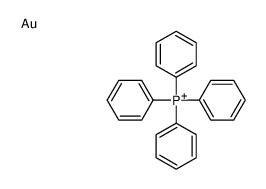
- 30142-19-9
- C24H20AuP+
- 536.35600
- All (0)
- China (0)
- (0)

- 53240-52-1
- AuCr
- 248.96300
- All (0)
- China (0)
- (0)

- 51434-62-9
- AuK
- 236.06500
- All (0)
- China (0)
- (0)
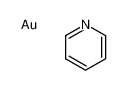
- 514789-98-1
- C5H5AuN
- 276.06600
- All (0)
- China (0)
- (0)
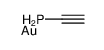
- 193358-81-5
- C2H3AuP
- 254.98600
- All (0)
- China (0)
- (0)

- 14320-93-5
- Au
- 194.96500
- All (0)
- China (0)
- (0)
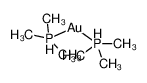
- 38614-53-8
- C6H20AuP2
- 351.13700
- All (0)
- China (0)
- (0)
Related Products More >

- 108-78-1
- USD 4.5000
- 25kg
- 13453-07-1
- Request For Quotation
- 1L
- 94232-38-9
- Request For Quotation
- 90597-79-8
- Request For Quotation
- 9000-69-5
- Request For Quotation
- 898543-06-1
- Request For Quotation
- 866395-16-6
- Request For Quotation
- 852445-83-1
- Request For Quotation


The key mechanism involves antibodies’ inherent ability to recognize conserved epitopes across related viruses. For example, a test designed for flaviviruses might use antibodies cross-reactive with Zika, dengue, and other similar viruses. When exposed to a sample, the antibodies generate a pattern of signals (e.g., variations in color intensity or distribution) that correspond to the virus present. This pattern is compared to a pre-established database of known viral signatures. If the pattern matches an existing virus, it is identified; if novel, it flags a potential emerging pathogen.
Practically, this method accelerates outbreak response by bypassing the need for costly DNA sequencing or pathogen-specific test development. During the COVID-19 pandemic, such tests could have distinguished SARS-CoV-2 variants using existing antibodies against related coronaviruses. The analysis relies on affordable hardware (e.g., smartphone-based image analysis) and rapid visual readouts, making it accessible in low-resource settings. By repurposing cross-reactive antibodies—often considered a nuisance in traditional diagnostics—this approach turns paper tests into versatile tools for multiplexed viral detection and pandemic preparedness.
In practice, these tests use antibodies conjugated with gold nanoparticles, which produce visible signals (like the red dots in the image). Instead of a single "yes/no" readout, they generate unique signal patterns—"fingerprints"—based on the binding of antibodies to various targets. Pattern-based analysis, analogous to chemical sensing, then categorizes these patterns. It doesn’t require prior knowledge of the exact target; instead, it compares the observed pattern to a pre-established library of known disease patterns. If the pattern is unfamiliar, it may indicate an emerging virus.
This method bypasses expensive DNA sequencing by using existing antibodies ("raiding the pantry"), enabling faster identification of new diseases. Compared to standard methods, it’s more accessible and adaptable: standard tests need specific antibodies for each target, while this approach uses cross-reactivity to cover multiple targets with fewer components.
A potential misunderstanding is that cross-reactivity reduces accuracy. In reality, pattern analysis compensates by treating the "non-specificity" as a data source—unique binding patterns still distinguish between different targets or emerging variants, as shown in the SARS-CoV-2 variant detection study. This innovation bridges the gap between simplicity and versatility in point-of-care diagnostics.