


 Home
Home
I am comparing the reactivity of elements and want to understand whether fluorine is more reactive than francium. Which element is more reactive, and what factors determine their reactivity in chemical reactions?
Is fluorine more reactive than francium, what factors influence their reactivity, and how do their positions in the periodic table and chemical properties contribute to their behavior in reactions?
Related Encyclopedia

- 36840-25-2
- Fr
- 223.00000
- All (0)
- China (0)
- (0)

- 14762-94-8
- F
- 18.99840
- All (0)
- China (0)
- (0)
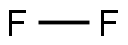
- 7782-41-4
- F2
- 38
- All (0)
- China (0)
- (0)
- 85184-26-5
- FrNO3
- 285.00500
- All (0)
- China (0)
- (0)

- 15756-41-9
- Fr
- 221.01400
- All (0)
- China (0)
- (0)

- 7440-73-5
- Fr
- 223.00000
- All (0)
- China (0)
- (0)

- 15756-98-6
- Fr
- 223.02000
- All (0)
- China (0)
- (0)
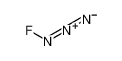
- 14986-60-8
- FN3
- 61.01850
- All (0)
- China (0)
- (0)

- 14701-13-4
- F+
- 18.99840
- All (0)
- China (0)
- (0)
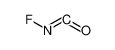
- 42088-15-3
- CFNO
- 61.01520
- All (0)
- China (0)
- (0)
Related Products More >

- 82419-35-0
- Request For Quotation
- 82419-35-0
- Request For Quotation
- 82419-35-0
- Request For Quotation
- 52623-00-4
- Request For Quotation
- Bottle,barrel,cargo,container,etc.
- 3952-78-1
- Request For Quotation
- 3952-78-1
- Request For Quotation
- 3952-78-1
- Request For Quotation
- 3952-78-1
- Request For Quotation


Is Fluorine More Reactive Than Francium?
Fluorine: Fluorine is the most reactive nonmetal and the most electronegative element. It readily gains an electron to achieve a stable octet, making it highly reactive with almost all other elements.
Francium: Francium is the most reactive metal and the least electronegative element. It readily loses its single valence electron, making it highly reactive, especially with water and acids.
Factors Influencing Reactivity:
Electronegativity: Fluorine's high electronegativity (4.0 on the Pauling scale) drives its reactivity, as it aggressively attracts electrons to form bonds.
Ionization Energy: Francium has an extremely low ionization energy, meaning it easily loses its valence electron, contributing to its high reactivity as a metal.
Atomic Size: Francium's large atomic size reduces the attraction between its nucleus and valence electron, making it easier to lose the electron. Fluorine's small size enhances its ability to attract electrons.
Chemical Behavior:
Fluorine: Fluorine reacts violently with most elements, including noble gases like xenon, and forms strong covalent or ionic bonds. It is used in compounds like Teflon and fluoride toothpaste.
Francium: Francium reacts explosively with water and air, but its extreme rarity and radioactivity limit its practical applications.
Practical Considerations:
Handling Fluorine: Fluorine is highly toxic and corrosive, requiring specialized equipment and handling procedures to prevent accidents.
Handling Francium: Francium is radioactive and extremely rare, making it difficult to study or use. Safety precautions for radioactivity are essential.
Environmental Impact: Both elements can form hazardous compounds, so proper disposal and containment are critical.
Applications and Considerations:
Fluorine's Uses: Fluorine is used in pharmaceuticals, refrigerants, and industrial chemicals, but its reactivity requires careful management.
Francium's Rarity: Francium's scarcity and radioactivity limit its applications, but it is studied in nuclear physics and chemistry.
Safety Protocols: Handling these elements requires strict safety measures, including protective gear and controlled environments.
Educational Value: Understanding the reactivity of fluorine and francium provides insights into periodic trends and chemical bonding.
Factors influencing reactivity: For fluorine, its small atomic size and high effective nuclear charge allow it to attract electrons strongly. For francium, its large atomic size and low ionization energy mean it easily loses its outermost electron. But francium's reactivity is somewhat limited by its rarity and short half - life.
Periodic table position and chemical properties: Fluorine is in Group 17 (halogens), on the right side of the periodic table. It has 7 valence electrons and a strong drive to gain 1 more. Francium is in Group 1 (alkali metals), on the left side. It has 1 valence electron that it readily donates. In reactions, fluorine will vigorously react with most substances to gain electrons, while francium will react by losing its electron, but fluorine's reactivity is more intense due to its electron - attracting power.