


 Home
Home
Could switching to low-sodium salt be a game-changer in stomach cancer prevention? A groundbreaking Chinese study tracking 21,000 villagers for 5 years found 25% potassium-enriched salt reduced gastric cancer cases by 24%. But with researchers admitting the evidence is still 'borderline significant,' should we wait for longer-term data before recommending population-wide adoption? And how does this potential benefit weigh against known risks of increased potassium intake for certain groups?
Chinese Experts' New Research Findings:Can Low - Sodium Salt Really Reduce the Risk of Gastric Cancer?
Related Encyclopedia
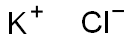
- 7447-40-7
- KCl
- 74.55
- All (273)
- China (27)
- (273)

- 7647-14-5
- ClNa
- 58.44
- All (45)
- China (29)
- (45)
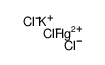
- 20582-71-2
- Cl4HgK-
- 381.49000
- All (0)
- China (0)
- (0)

- 25443-63-4
- Cl6K3Ru
- 431.08
- All (0)
- China (0)
- (0)

- 20510-56-9
- ClNa
- 60.46000
- All (0)
- China (0)
- (0)

- 20510-55-8
- ClNa
- 58.44000
- All (0)
- China (0)
- (0)
- 95860-64-3
- ClCsNa
- 191.34800
- All (0)
- China (0)
- (0)
- 95860-66-5
- ClKNa
- 97.54110
- All (0)
- China (0)
- (0)
- 66650-11-1
- ClH2NaO
- 76.45810
- All (0)
- China (0)
- (0)
- 15707-74-1
- Cl4KNbO
- 289.81600
- All (0)
- China (0)
- (0)
Related Products More >

- 7447-40-9
- CNY Request For Quotation
- 7447-40-8
- CNY Request For Quotation
- 7447-40-7
- CNY Request For Quotation
- 7447-40-7
- CNY 25.0000
- 25kg
- 7784-24-9
- Request For Quotation
- 7647-14-5
- Request For Quotation
- 25kg Bag
- 7647-14-5
- Request For Quotation
- 100g;1kg;25g
- 7647-14-5
- Request For Quotation
- 25kg*880bag,total25tons/20fcl


Waiting for longer - term data before recommending population - wide adoption is a prudent approach. Since gastric cancer development is a long - term process, often taking 5 - 6 years or even longer, extending the follow - up period to 10 years or more, as proposed by the researchers, is likely to provide a clearer picture of the true impact of low - sodium salt on gastric cancer risk. This would help eliminate the possibility that the current observed reduction in cases is due to chance or other confounding factors.
Regarding the balance between potential benefits and risks of increased potassium intake, it's crucial to consider individual health conditions. For most people, the potassium supplementation from low - sodium salt can be beneficial. But for certain groups with kidney problems or other medical conditions that affect potassium metabolism, excessive potassium intake may pose risks such as hyperkalemia. Therefore, any recommendation for using low - sodium salt should be accompanied by appropriate health guidance and individual assessment.
Looking at the study itself, it covered nearly 21,000 villagers from 600 villages in five northern provinces of China. With an average age of 65.4 years and a balanced gender distribution, the study has a certain degree of representativeness. During the follow - up period of about 4.7 years, the number of gastric cancer cases per 1,000 person - years in the low - sodium salt group was 1.84, which was about 0.6 cases less than that in the regular salt group. However, the formation of gastric cancer is a long - term process, usually taking 5 - 6 years or even more than a decade. Based on the current five - year tracking data, only preliminary protective signals have been observed. If the tracking period is extended to 10 years, the effect of low - sodium salt in reducing the risk of gastric cancer may become more evident. The research team's calculations show that as the follow - up time doubles and more gastric cancer cases are observed, the role of low - sodium salt in reducing the risk of gastric cancer is expected to rise from the "borderline of statistical significance" to the level of "conclusive evidence." Therefore, at this stage, it is indeed necessary to wait for more long - term data. Only after obtaining more sufficient evidence should we consider recommending the widespread adoption of low - sodium salt to the public.
Regarding the trade - off between the potential benefits of low - sodium salt and the known risks of increased potassium intake for certain groups, a comprehensive consideration is required. Low - sodium salt partially replaces sodium chloride with potassium chloride, reducing sodium intake while supplementing potassium. Existing studies have confirmed that low - sodium salt has significant effects on reducing blood pressure, reducing the probability of stroke and its recurrence, as well as decreasing the risk of cardiovascular events and premature death. Now, this study has found that it may also help reduce the risk of gastric cancer, which represents its potential great benefits. However, for some special groups, such as patients with renal insufficiency, excessive potassium intake may lead to hyperkalemia, posing a threat to health. Therefore, when recommending low - sodium salt, people need to be categorized. For those with normal renal function, it is appropriate to recommend the use of low - sodium salt to obtain its potential health benefits. For those with renal insufficiency and other conditions unsuitable for high - potassium intake, careful consideration is needed, and its use may even need to be avoided to prevent the risks associated with excessive potassium intake. Overall, although low - sodium salt shows potential in preventing gastric cancer, before promoting its application, it is essential to fully weigh its advantages and disadvantages and provide reasonable advice and guidance based on the physical conditions of different groups.