


 Home
Home
I’ve been thinking about the huge number of electric vehicle batteries that will eventually end up as waste. Traditional recycling seems so complicated, involving harsh chemicals, high heat, and hazardous byproducts. Could a battery made from self-assembling materials really change this? If a solid-state battery’s electrolyte can break down into its original molecules in minutes, does that mean the entire battery could practically fall apart on its own for easy recycling? How would this approach affect battery performance and safety, and is it feasible to integrate such materials into existing lithium-ion battery designs? Could this “recycle-first” strategy become a practical way to reduce e-waste while still meeting the energy and durability demands of modern EVs?
Could Self-Assembling Battery Materials Make EV Batteries Fully Recyclable?
Related Encyclopedia
- 14885-65-5
- FLi
- 25.01350
- All (0)
- China (0)
- (0)
- 12596-44-0
- Li2
- 13.03110
- All (2)
- China (2)
- (2)
- 12596-45-1
- Li2
- 14.03200
- All (2)
- China (2)
- (2)

- 17341-24-1
- Li+
- 6.94
- All (2)
- China (2)
- (2)
- 12596-43-9
- Li2
- 12.03020
- All (2)
- China (2)
- (2)
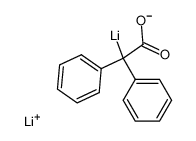
- 60538-71-8
- C14H10Li2O2
- 224.11000
- All (0)
- China (0)
- (0)
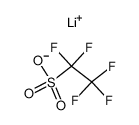
- 2923-20-8
- C2F5LiO3S
- 206.01800
- All (0)
- China (0)
- (0)

- 21743-25-9
- C2H7LiP
- 68.99170
- All (0)
- China (0)
- (0)
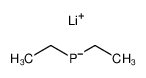
- 19093-80-2
- C4H11LiP
- 97.04490
- All (0)
- China (0)
- (0)
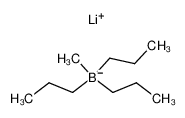
- 26282-83-7
- C10H24BLi
- 162.05000
- All (0)
- China (0)
- (0)
Related Products More >

- 554-13-2
- CNY 60.0000
- 25kg
- 7447-41-8
- USD 6.0000
- 25kg
- 7447-41-8
- USD 6.0000
- 1kg
- 14283-07-9
- Request For Quotation
- 25kg
- 13453-80-0
- Request For Quotation
- 1ton
- 13453-80-0
- Request For Quotation
- 25kg
- 13453-80-0
- Request For Quotation
- 25kg
- 13453-80-0
- Request For Quotation
- 1ton


Of course, there are trade-offs. Right now, these materials aren’t pushed to full performance, so energy output and lifespan may not match conventional batteries yet. But the clever part is that only a layer of this material is needed to trigger self-disassembly. That means it could be added to existing battery designs without major changes.
However, the electrolyte’s self-disassembly alone is insufficient for full battery recycling. Electrodes contain valuable metals (e.g., lithium, cobalt, nickel) embedded in stable matrices, requiring additional chemical or electrochemical steps for recovery. The true innovation lies in designing the electrolyte as a recycling trigger: its dissolution could permit non-destructive access to electrodes, streamlining subsequent hydrometallurgical or direct recycling processes. This contrasts with conventional lithium-ion recycling, which relies on shredding and high-temperature smelting, generating hazardous emissions and cross-contamination.
Performance and safety implications are multifaceted. Reversible self-assembly necessitates chemically labile bonds, which may compromise electrochemical stability or ion conductivity compared to inert ceramics (e.g., LLZO) or polymer electrolytes. Optimizing trade-offs between recyclability and operation under high voltage or temperature is critical. Safety could be enhanced if the organic solvent-triggered decomposition replaces thermal runaway risks, but unintended triggering during operation must be prevented through material stability tuning.
Integration into existing lithium-ion designs faces challenges: conventional liquid electrolytes are pervasive, and solid-state interfaces are notoriously resistant to degradation. Hybrid systems, where a dissolvable interlayer aids recycling while maintaining performance, may be more feasible. The "recycle-first" strategy must also align with manufacturing scalability and cost constraints. While not a standalone solution, this approach could redefine battery lifecycle design, reducing e-waste by prioritizing circularity without inherently sacrificing energy density or durability if complementary innovations in electrode and cell architecture advance in parallel.
In terms of performance and safety, this approach has both limitations and advantages. When used as the sole electrolyte in battery cells, the self-assembling material does not yet deliver optimal performance, falling short of the energy density and durability demands of high-end EVs. However, researchers propose a more practical integration: using it as a single layer within the electrolyte system, where only this layer needs to break down to initiate recycling, without compromising the rest of the electrolyte’s functional integrity. For safety, it represents a significant upgrade over traditional lithium-ion batteries—their electrolytes are highly flammable and degrade over time to produce toxic byproducts requiring specialized handling, whereas the self-assembling material decomposes into non-toxic, original molecules, reducing fire risks during use and eliminating hazardous waste during recycling.
Integrating this material into existing lithium-ion battery designs is feasible, as it has already been proven to work effectively as an electrolyte in solid-state battery units. Ongoing research focuses on adapting its structure to fit the architecture of current lithium-ion systems, with further experiments aimed at optimizing its conductivity and stability to match existing electrolyte performance. Beyond existing designs, it also shows promise for use in new battery chemistries, expanding its potential applications.
The “recycle-first” strategy—prioritizing recyclability in material design rather than treating it as an afterthought, as the battery industry has historically done—could indeed become a practical solution to cut e-waste while meeting modern EV needs. In daily life, it would make EV ownership more environmentally responsible, easing public concerns about battery disposal and reducing the ecological burden of e-waste. Industrially, it would simplify recycling processes, lower costs, and promote a circular economy in the EV and battery sectors, reducing reliance on raw material extraction for new batteries. While not a fully mature solution yet, its pioneering focus on recyclability and ongoing optimization lay the groundwork for a more sustainable future. This approach not only tackles the immediate problem of battery waste but also aligns the EV industry with global goals of reducing pollution and conserving resources, ensuring long-term sustainability as EV adoption continues to grow.